


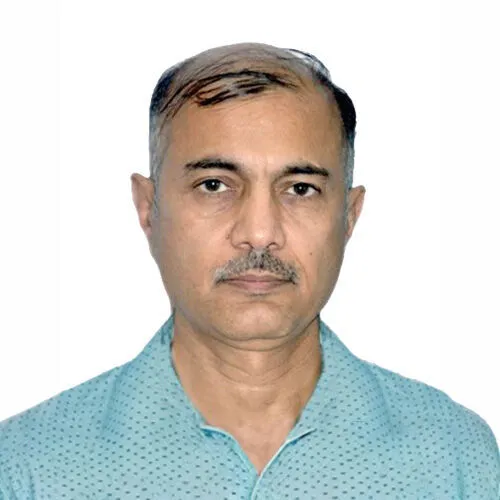
Anoop Dimri
General Manager
Engineers India Limited
India
Handled vast national and international Projects. Having degree in Bachelor of Mechanical Engineering, Master of business Administration, Post Graduate Diploma in Operations Management
- 18 years working in conceptual design, execution of different capacities of Power Plant, Boilers & Heat recovery Steam generations
- 9 years in O&M of captive power plant
Participates in
TECHNICAL PROGRAMME | Energy Technologies
Solar, Wind and Nuclear Integration
Forum 21 | Hall 10 - Technical Programme 4
28
April
14:30
16:00
UTC+3
Energy Systems Integration (ESI) involving renewable energy and traditional energy can play a vital role in delivery of reliable & cost-effective energy services, along with substantial reduction in greenhouse gas emissions. Concentrated Solar Technologies (CST) is one such RE technology that holds good potential and is highly suitable for such integration process, especially in high energy density refinery & petrochemical complex. This paper tries to bring out ways to address optimum CST RE integration within existing Refineries & Petrochemical complex, not only for existing complex but also for new projects. The paper will go on to demonstrate how this can reduce the Capex & Opex spend for energy, without compromising on reliability, dispatchability, capacity utilization and flexibility in operation.
Application:
Refinery & petrochemical complex have their own captive power plants which provide both power and steam for the complex, not only during stable operations but also during startups / shutdowns / turndowns / black outs etc. Integration of CST with CPP holds good promise of increasing the overall efficiency of steam & power generation, and also carbon reduction. The main concept of a novel integration mechanism includes replacing a part of the steam being used in the process / power complex with the steam produced from the solar installation. This hybrid integration mechanism is having advantages to generate superheated steam through solar based system, reduction of steam generation in the fossil fuel CPP complex and as a result, reduction in fuel consumption in the boiler. Additionally, there are many other possible mechanisms for integrating solar energy into a Captive power plant, such as air preheating, feed water preheating, steam superheating, steam reheating, CO2 & NOX capturing (flue gas cleaning), etc.
Results and Conclusions:
Based on design & analysis of realistic data scenarios both for new and existing projects, it is demonstrated that such integration not only reduces the downstream investment cost of Balance of Plants, but also mitigates the challenges associated with solar radiation fluctuation & climatic condition thus helping to overcome the main drawback associated with such RE sources. As one such example, a complex located in high Solar radiation zone, with additional area of ~1,20,000 sq.m & additional capital cost of USD ~30 million can have additional integrated generation with 50 TPH of Superheated steam at 50 bar.
Technical Contributions:
Case Studies: Integration of CST with CPP for a Refinery and an Integrated Petrochemical Complex
Keywords:
Energy Systems integration (ESI), Captive Power Plant (CPP), Concentrated Solar Thermal (CST), Boiler Feed Water (BFW), Capex, Opex.
Co-author/s:
Dhiman Deb, Senior General Manager, Engineers India Limited.
Application:
Refinery & petrochemical complex have their own captive power plants which provide both power and steam for the complex, not only during stable operations but also during startups / shutdowns / turndowns / black outs etc. Integration of CST with CPP holds good promise of increasing the overall efficiency of steam & power generation, and also carbon reduction. The main concept of a novel integration mechanism includes replacing a part of the steam being used in the process / power complex with the steam produced from the solar installation. This hybrid integration mechanism is having advantages to generate superheated steam through solar based system, reduction of steam generation in the fossil fuel CPP complex and as a result, reduction in fuel consumption in the boiler. Additionally, there are many other possible mechanisms for integrating solar energy into a Captive power plant, such as air preheating, feed water preheating, steam superheating, steam reheating, CO2 & NOX capturing (flue gas cleaning), etc.
Results and Conclusions:
Based on design & analysis of realistic data scenarios both for new and existing projects, it is demonstrated that such integration not only reduces the downstream investment cost of Balance of Plants, but also mitigates the challenges associated with solar radiation fluctuation & climatic condition thus helping to overcome the main drawback associated with such RE sources. As one such example, a complex located in high Solar radiation zone, with additional area of ~1,20,000 sq.m & additional capital cost of USD ~30 million can have additional integrated generation with 50 TPH of Superheated steam at 50 bar.
Technical Contributions:
Case Studies: Integration of CST with CPP for a Refinery and an Integrated Petrochemical Complex
Keywords:
Energy Systems integration (ESI), Captive Power Plant (CPP), Concentrated Solar Thermal (CST), Boiler Feed Water (BFW), Capex, Opex.
Co-author/s:
Dhiman Deb, Senior General Manager, Engineers India Limited.