


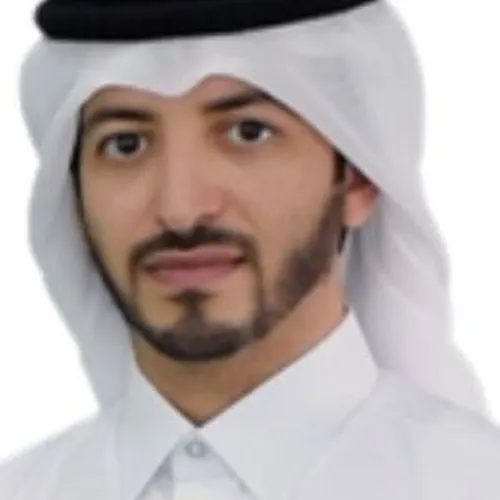
Hilal Saad Al-Mohannadi

Environmental Affairs and Regulatory Manager

QatarEnergy LNG

Qatar

Hilal Saad Al-Mohannadi is the Environmental Affairs and Regulatory Manager at QatarEnergy LNG, where he leads environmental compliance and reporting, regulatory permitting, strategic environmental management and waste management operations for all QatarEnergy LNG operations and projects.   


Since joining QatarEnergy LNG in 2010, Hilal has successfully managed environmental compliance and biodiversity programs for a range of major projects, including the Barzan Gas Plant, Flow Assurance, and current North Field Expansion projects, as well as regulatory advocacy and negotiations with the Ministry of Environment and Climate Change.  


As part of the HSEQ Leadership Team, Hilal currently leads the implementation of QatarEnergy LNG’s Environmental Strategy in collaboration with QatarEnergy, QatarEnergy LNG shareholders and other national stakeholders.  This key corporate initiative includes long-term environmental, sustainability and climate change programs and targets for the Company to address emerging risks, issues and opportunities in the energy transition. 

Participates in

TECHNICAL PROGRAMME | Energy Technologies
GHG Emissions (Scope 1&2) Abatement (CO2, Methane) - Detection; CO2 Capture; CCUS; DAC; Carbon Products
Forum 20 | Hall 10 - PRINCIPAL BUYER Technical Programme 4
13
October
09:30 10:45
UTC+3
QatarEnergy LNG produces 77 million tonnes per annum (MTPA) of Liquefied Natural Gas (LNG) and ~14 MTPA of sales gas. The company also operates two condensate refineries processing over 306,000 barrels per stream day of products. Associated facilities include two helium refineries, sulfur granulation, and storage and loading facilities for LNG and hydrocarbon products in Ras Laffan Industrial City, Qatar. QatarEnergy LNG is currently undergoing a massive expansion taking its LNG production to 142 MTPA and scaling up supporting infrastructure. The scale and complexity of current operations and future development bring significant challenges to managing our Greenhouse Gas (GHG) emissions footprint. Environmental protection and sustainability are a critical global imperative, reshaping industries worldwide, with LNG playing a pivotal role in the global transition to lower carbon energy sources. As the world’s premier LNG company, environmental sustainability is engrained in the QatarEnergy LNG’s vision and as part of its comprehensive Environmental Strategy launched in 2021, the company has developed multiple initiatives to reduce its GHG emissions. For our existing brownfield sites, we have focused on flare reduction through multiple projects such as Jetty Boil-off Gas (JBOG) capture, purge gas reduction, turnaround flare minimization and an extensive passing valve monitoring program; these initiatives have helped reduce our GHG emissions by approximately 3 MTPA. Our current CO2 injection facilities are designed for an injection capacity of 2.2 MTPA capacity and are being enhanced for our operating assets to add injection capacity of 4 MTPA by 2030. Additionally, we are focusing on energy efficiency, reliability improvements, and an extensive methane emission mitigation program catering to Oil and Gas Methane Partnership (OGMP) 2.0 expectations. For our upcoming LNG expansion facilities, we continue employing industry best practices and innovative efforts, such as focusing on energy efficiency, heat recovery and reduced flaring. A key mitigation approach inherent in our expansion facility design is the use of CO2 capture and storage where-in we plan to inject ~3.2 MTPA CO2. In summary, between 2013, which is our baseline year and up to 2030, we will have reduced our GHG emissions by approximately 13 MTA, helping us meet our strategic target of 20% reduction in GHG intensity. The proposed paper will showcase our sustained efforts, journey, and challenges related to GHG emissions management and reduction as captured above covering both our existing and upcoming LNG expansion facilities.