


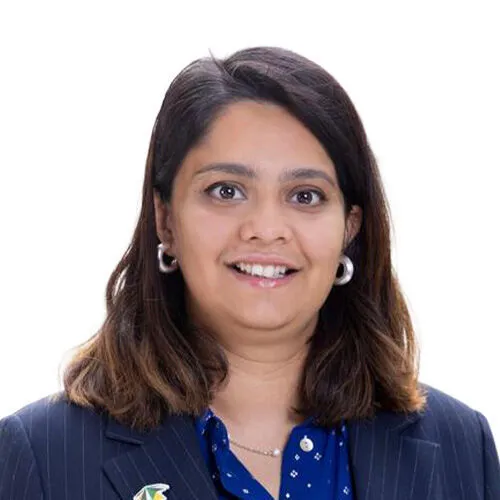
Aayushi Awasthy
Fellow
KAPSARC
Saudi Arabia
Dr. Aayushi Awasthy is an energy economist at KAPSARC. Her PhD focused on electricity access in India. She works on clean cooking, time use, and carbon finance in Africa, and on HFC emissions and cooling policy in Saudi Arabia. Her research spans household transitions and national strategies. With multicountry experience, she has worked with the IEA, TERI, and Tyndall Centre. Her work promotes inclusive, gender-sensitive energy solutions.
Participates in
TECHNICAL PROGRAMME | Energy Leadership
Energy Access for All
Forum 25 | Hall 10 - Technical Programme 5
27
April
13:30
15:00
UTC+3
Clean cooking remains the most underfunded component of Africa’s energy transition, despite its profound implications for climate, health, and gender equity. Over 900 million people on the continent still rely on biomass and other polluting fuels for cooking, contributing to more than 700,000 premature deaths annually and significant forest degradation. While clean cooking solutions—such as LPG (liquefied petroleum gas), improved biomass cookstoves, and electric cooking—are technically viable and aligned with SDG 7 and net-zero goals, affordability remains the principal barrier to widespread adoption.
A recent breakthrough in climate cooperation offers a new pathway. In 2023, Ghana and Switzerland authorized the first clean cooking mitigation activity under Article 6.2 of the Paris Agreement. Facilitated by the KliK Foundation, this initiative supports the distribution of next generation cookstoves to households in Ghana and issues Internationally Transferred Mitigation Outcomes (ITMOs) based on verified emissions reductions. This example demonstrates how carbon markets can be harnessed to support both national climate goals and local development priorities, particularly energy access.
This paper explores the potential of carbon markets as a scalable financing mechanism to accelerate clean cooking adoption across Africa. We provide a comparative analysis of clean cooking carbon projects in Kenya, Rwanda, and Ghana, evaluating their emissions reduction methodologies, credit issuance trends, and revenue generation. Drawing on recent field data and carbon registry records, we demonstrate that well-structured clean cooking projects can generate between 1–3 tCO₂e per household annually, translating into meaningful revenue at current voluntary market prices.
However, the paper also highlights key challenges—including market fragmentation, high transaction costs, evolving standards, and limited national readiness to implement Article 6 mechanisms. To overcome these barriers, we propose a pan-African carbon finance facility for clean cooking, supported by harmonized MRV (monitoring, reporting, and verification) protocols, pooled crediting platforms, and regional project aggregation. This model would reduce risk, enhance credit quality, and attract investment at scale.
By anchoring clean cooking within national energy strategies and NDCs (nationally determined contributions), and by positioning it as a climate solution eligible for results-based finance, governments and partners can catalyze the sector. Our findings make the case for integrating carbon-financed clean cooking into Africa’s broader energy planning to achieve access, affordability, and climate mitigation simultaneously.
This paper contributes to the discussion on energy affordability and transition equity by presenting clean cooking not just as a development imperative but also as a climate-aligned investment opportunity. As geopolitical tensions and supply chain pressures reshape energy markets, clean cooking carbon finance offers a decentralized, resilient, and people-centered approach to delivering energy for all by 2030.
A recent breakthrough in climate cooperation offers a new pathway. In 2023, Ghana and Switzerland authorized the first clean cooking mitigation activity under Article 6.2 of the Paris Agreement. Facilitated by the KliK Foundation, this initiative supports the distribution of next generation cookstoves to households in Ghana and issues Internationally Transferred Mitigation Outcomes (ITMOs) based on verified emissions reductions. This example demonstrates how carbon markets can be harnessed to support both national climate goals and local development priorities, particularly energy access.
This paper explores the potential of carbon markets as a scalable financing mechanism to accelerate clean cooking adoption across Africa. We provide a comparative analysis of clean cooking carbon projects in Kenya, Rwanda, and Ghana, evaluating their emissions reduction methodologies, credit issuance trends, and revenue generation. Drawing on recent field data and carbon registry records, we demonstrate that well-structured clean cooking projects can generate between 1–3 tCO₂e per household annually, translating into meaningful revenue at current voluntary market prices.
However, the paper also highlights key challenges—including market fragmentation, high transaction costs, evolving standards, and limited national readiness to implement Article 6 mechanisms. To overcome these barriers, we propose a pan-African carbon finance facility for clean cooking, supported by harmonized MRV (monitoring, reporting, and verification) protocols, pooled crediting platforms, and regional project aggregation. This model would reduce risk, enhance credit quality, and attract investment at scale.
By anchoring clean cooking within national energy strategies and NDCs (nationally determined contributions), and by positioning it as a climate solution eligible for results-based finance, governments and partners can catalyze the sector. Our findings make the case for integrating carbon-financed clean cooking into Africa’s broader energy planning to achieve access, affordability, and climate mitigation simultaneously.
This paper contributes to the discussion on energy affordability and transition equity by presenting clean cooking not just as a development imperative but also as a climate-aligned investment opportunity. As geopolitical tensions and supply chain pressures reshape energy markets, clean cooking carbon finance offers a decentralized, resilient, and people-centered approach to delivering energy for all by 2030.