


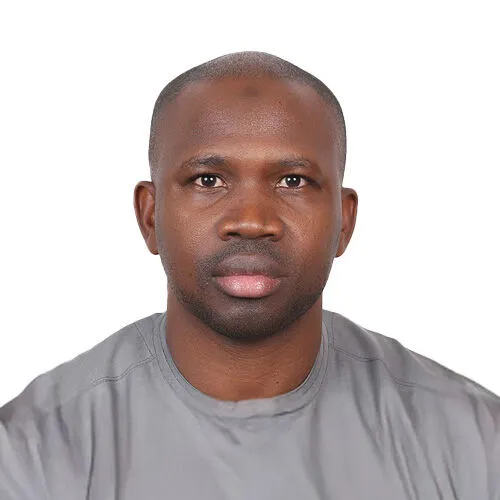
Salisu Isihak
Senior Business Advisor to the Managing Director
Nigerian National Petroleum Company Ltd.
Nigeria
Dr. Salisu Isihak is a multiple award-winning energy professional, sustainability advocate, and corporate strategist with nearly two decades of experience across downstream petroleum, renewable-energy deployment, energy modelling, and policy advisory. He currently serves as Senior Business Advisor to the Managing Director of NNPC Retail Limited, where he helps drive strategic initiatives that strengthen nationwide energy access, operational excellence, and market competitiveness. His work spans retail fuels, LPG, CNG, lubricants, aviation, and emerging decarbonisation pathways—supporting NNPC Retail’s growth and its ambition to become Africa’s most innovative energy marketing company.
Previously, Dr. Isihak served as Senior Advisor to the Executive Director of the Rural Electrification Fund at the Rural Electrification Agency, contributing to clean-energy programmes targeting underserved communities, health facilities, productive-use sectors, and public institutions. His work supported Nigeria’s efforts toward achieving SDG7, advancing renewable-energy initiatives designed to reach millions through sustainable technologies and innovative financing models.
His career includes impactful roles within NNPC Retail, and the financial sector, where he led reforms that improved performance, expanded energy access, and enhanced organisational capability.
A frequent speaker at global energy forums, he has received grants and recognition from organisations such as UNIDO, the World Bank, the EU, and academic institutions across Africa, Europe, and North America. His work in energy modelling and access planning is widely referenced for advancing data-driven electrification planning.
Dr. Isihak holds a First-Class BSc in Economics from Usmanu Danfodiyo University and an MSc in Energy Economics (Distinction) from the University of Dundee and Ph.D in Sustainable Energy Development from De Montfort University, UK. He is a member of the Energy Institute (UK), SPE Abuja Section, and several professional networks across the sustainability ecosystem.
Participates in
TECHNICAL PROGRAMME | Energy Leadership
TECHNICAL PROGRAMME | Energy Leadership
TECHNICAL PROGRAMME | Energy Technologies
TECHNICAL PROGRAMME | Energy Technologies