


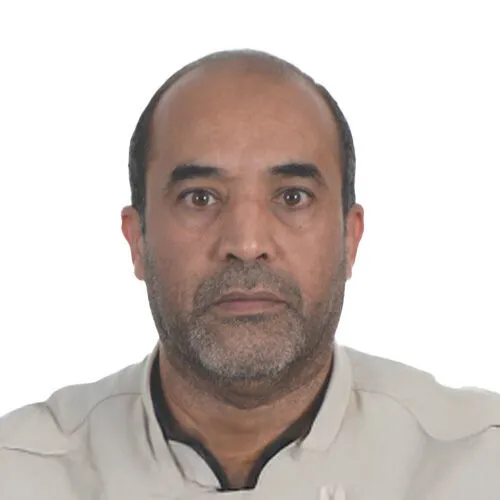
Yakoub Mohamed Karnaf
Studies Superintendent / Planning Department
Libyan National Oil Corporation
Libya
Mr. Yakoub Mohamed Karnaf holds an MSc in Oil & Gas Management from the University of Plymouth, UK, and brings over 35 years of experience in the oil and gas industry. He held senior roles at Veba Oil Operations, including Production Specialist and Operations Manager. At the Libyan National Oil Corporation, he served as Senior Production Advisor and Production Superintendent, and currently works as Studies Superintendent. He has contributed to multiple strategic initiatives and planning efforts.
Participates in
TECHNICAL PROGRAMME | Energy Leadership
Public Policy (Global and Local) - Climate Change, Transition Management, Supply Security and Energy Affordability
Forum 26 | Hall 10 - Technical Programme 5
27
April
15:00
16:30
UTC+3
Libya’s National Energy Strategy (LNES) launches a transformative roadmap to ensure a smooth transition of the country’s energy sector toward sustainability, affordability, and energy security. As a resource-rich, post-conflict nation with high energy and carbon intensity (1.82 kWh per USD of GDP and ~831 g CO₂ per kWh), Libya seeks an adequate strategic shift through economic modeling, policy reform, and infrastructure modernization. The NES employs a Net Benefit framework built on the novel Net Energy Revenue Equation. This equation integrates key components such as the levelized cost of energy (LCOE), Effective Load Carrying Capability (ELCC), and emissions modules to evaluate the expected transition scenarios, including Business-as-Usual, Gas-Substitution, and Accelerated Renewable Energy Deployment. The focused scenarios prioritize as first objective in replacing liquid fuels with natural gas, accelerating renewable deployment, and improving efficiency across end-use sectors.
Fuel subsidy reform is a critical mechanism for achieving this transition. In 2024, the national energy budget reached $17 billion, with approximately $8 billion allocated to subsidies. Redirecting these funds to clean energy investments could yield $5.8 billion in net energy benefits by 2030 and reduce CO₂ emissions by over 5.5 million tons annually. The LNES targets approximately 30% renewable electricity by 2037 and aims to approach as close as possible to net-zero greenhouse gas emissions by mid-century, supported by phased implementation and inclusive governance.
The National Oil Corporation will pilot the conversion of the Tibisti oil field to operate exclusively on renewable energy. This initiative will eliminate liquid fuel use in power generation and achieve zero flaring through an associated gas utilization project. On the other hand, solar energy units will be installed on selected homes, public facilities, and commercial buildings as Demo-Sites for decentralized energy solutions.
These efforts are intended to encourage policy-makers to establish legislative frameworks that support this ambitious transition. They also complement broader national measures such as wind and solar projects, and energy efficiency programs. A key objective is to reduce electricity consumption by up to 20% and cut CO₂ emissions by approximately 300,000 tons annually.
Aligned with global frameworks including the Paris Agreement (COP21, the UN Climate Change Conference held in 2015), UN Sustainable Development Goal 7 (SDG7: Ensure access to affordable, reliable, sustainable and modern energy for all), and the African Union’s Agenda 2063, the NES positions Libya as an emerging energy hub in North Africa. Within this frame, this paper highlights the LNES as an innovative, replicable model for resource-rich, post-conflict economies seeking to balance economic development with climate change commitments, offering actionable lessons for accelerating practical pathways toward a secure, low-carbon energy future.
Fuel subsidy reform is a critical mechanism for achieving this transition. In 2024, the national energy budget reached $17 billion, with approximately $8 billion allocated to subsidies. Redirecting these funds to clean energy investments could yield $5.8 billion in net energy benefits by 2030 and reduce CO₂ emissions by over 5.5 million tons annually. The LNES targets approximately 30% renewable electricity by 2037 and aims to approach as close as possible to net-zero greenhouse gas emissions by mid-century, supported by phased implementation and inclusive governance.
The National Oil Corporation will pilot the conversion of the Tibisti oil field to operate exclusively on renewable energy. This initiative will eliminate liquid fuel use in power generation and achieve zero flaring through an associated gas utilization project. On the other hand, solar energy units will be installed on selected homes, public facilities, and commercial buildings as Demo-Sites for decentralized energy solutions.
These efforts are intended to encourage policy-makers to establish legislative frameworks that support this ambitious transition. They also complement broader national measures such as wind and solar projects, and energy efficiency programs. A key objective is to reduce electricity consumption by up to 20% and cut CO₂ emissions by approximately 300,000 tons annually.
Aligned with global frameworks including the Paris Agreement (COP21, the UN Climate Change Conference held in 2015), UN Sustainable Development Goal 7 (SDG7: Ensure access to affordable, reliable, sustainable and modern energy for all), and the African Union’s Agenda 2063, the NES positions Libya as an emerging energy hub in North Africa. Within this frame, this paper highlights the LNES as an innovative, replicable model for resource-rich, post-conflict economies seeking to balance economic development with climate change commitments, offering actionable lessons for accelerating practical pathways toward a secure, low-carbon energy future.