


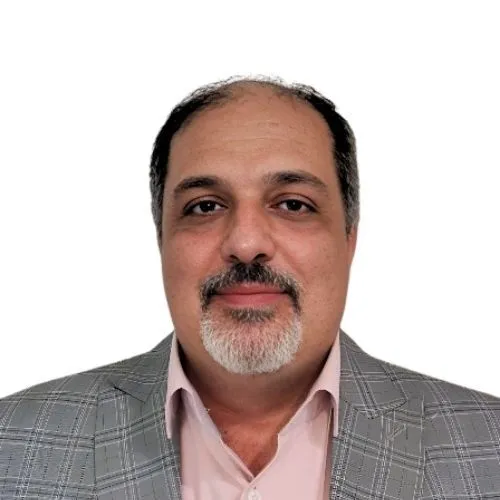
Mostafa Tasbandi
Head of Sustainable Development and Climate Change
National Iranian Oil Company (NIOC)
Iran
I am Mostafa Tasbandi, a senior environmental and civil engineer with nearly two decades of leadership in climate change, sustainable development, and environmental management within the energy sector. As the current Head of Sustainable Development and Climate Change at the General Directorate of HSE for Iran's Ministry of Petroleum, I am entrusted with steering the integration of environmental and sustainability principles into the heart of our national energy strategy.
My career, built on a foundation of a Master's degree in Civil-Environmental Engineering from the University of Tehran, has been dedicated to advancing the environmental performance of the oil and gas industry. I possess deep expertise in establishing Greenhouse Gas (GHG) inventory processes, developing carbon management procedures, and leading climate adaptation studies. A significant and growing focus of my work is on the practical implementation of ESG (Environmental, Social, and Governance) frameworks. I actively work to translate ESG principles into actionable strategies, understanding their critical importance for risk management, sustainable investment, and long-term business resilience in the global energy landscape.
A core aspect of my role involves sophisticated stakeholder engagement. I have consistently acted as a bridge between the Ministry of Petroleum, academic institutions, non-governmental organizations, and international bodies. For instance, I represented the Ministry at COP23 in Bonn and coordinated carbon management training with JICA of Japan. Domestically, I serve as the Ministry's representative in the Environment Commission of the Government Cabinet and am the primary contact with Iran's Department of Environment. This requires me to balance diverse perspectives, build consensus, and ensure that our sustainability initiatives are both technically sound and broadly supported.
I was instrumental in founding the EIA process within the Ministry of Petroleum and continue to serve as a senior reviewer for Environmental Impact Assessment reports for all major oil, gas, and petrochemical projects. I lead expert groups responsible for the nation's annual GHG inventory, develop localized emission factors, and verify carbon management studies. My commitment to capacity building is demonstrated through my design and delivery of training courses on environmental regulations for over 500 petroleum industry employees.
Prior to my current position, I honed my skills as Head of the Environmental Protection Department at the National Iranian Gas Transmission Company, where I managed environmental compliance across a nationwide network. My international experience also includes freelance consulting, where I have reviewed EIA reports for international projects, such as in Uganda. Also I developed 7 national EIA guidelines for Iran's Department of Environment.
Throughout my career, I have sought to fuse my extensive governmental experience with a global perspective on sustainability. I am a passionate advocate for the Sustainable Development Goals and am dedicated to leveraging my expertise in climate change, ESG, and stakeholder engagement to contribute to a more sustainable and resilient energy future.
Participates in
TECHNICAL PROGRAMME | Energy Leadership
Drawing on the author’s 18 years of EIA expertise and leadership as Head of Sustainable Development at the Ministry of Petroleum, this paper analyzes stakeholder engagement in three project categories: (1) point-based projects, such as petrochemical plants and oil refineries (e.g., a petrochemical complex in Bushehr Province); (2) linear projects, including oil and gas pipelines (e.g., a petroleum products transfer pipeline from southwest to central Iran); and (3) large-scale field developments (e.g., an oilfield development in Khuzestan Province by the National Iranian South Oil Company). These case studies demonstrate how inclusive consultations with local communities, NGOs, and regulators have improved project outcomes, reduced conflicts, and enhanced environmental management plans.
At the policy level, the Ministry’s HSE Directorate has revised the EIA guidelines for the petroleum industry, emphasizing increased stakeholder participation and transparency. These reforms, coupled with efforts to assess and improve EIA effectiveness, have strengthened governance frameworks, aligning with the global theme of Pathways to an Energy Future for All. Best practices include participatory workshops and digital engagement platforms, while lessons learned highlight the need for capacity-building to address stakeholder concerns. Challenges, such as regulatory gaps, are addressed through actionable recommendations, including standardized stakeholder feedback mechanisms.
This study underscores EIA’s role as a collaborative platform, ensuring Iran’s petroleum industry meets societal expectations while advancing sustainability. By sharing practical insights and policy reforms, it contributes to global discussions on effective stakeholder engagement in the energy sector.