

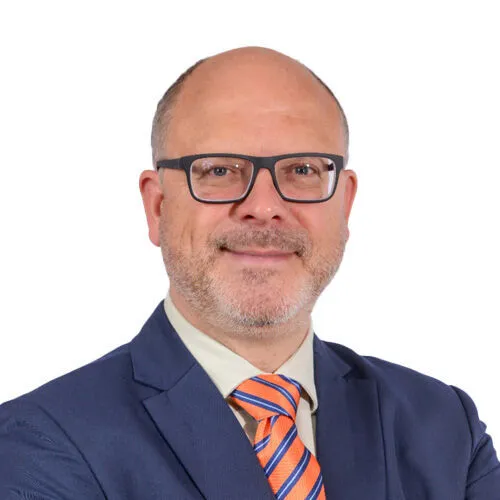
Sean Trainor
CEO
SCG
United Arab Emirates
Sean is Chief Executive of Salient Communication Group specialising in reputation management and stakeholder engagement.
With over 4 decades of experience, including the first half of his career in the UK nuclear industry, Sean brings deep technical and strategic expertise to complex industry challenges.
Recognised by industry peers as a thought leader in his field, Sean is passionate about the power of communication and meaningful dialogue in accelerating transformation.
Participates in
TECHNICAL PROGRAMME | Energy Leadership
Stakeholder Engagement
Forum 31 | Hall 10 - Technical Programme 5
30
April
10:00
11:30
UTC+3
There is no single roadmap for the energy transition. Each country and market is navigating its own complex path. While progress is being made, it remains uneven - and in many areas, is stalling.
The global demand for secure, accessible, affordable, and sustainable energy is increasing. Meeting this demand requires more than technical innovation, it calls for a fundamental shift in how we engage those most affected. Whether it's developing countries struggling to access clean, affordable power, communities on the front line of climate change, or oil-based economies pursuing diversification, solving the energy trilemma isn't lust about investment in technology - it's about building trust.
As the energy sector grapples with its environmental, social, and economic footprint, both governments and businessses must move beyond compliance. It's time to reclaim proven engagement models that build consensus and accelerate action - securing the vital "social license to operate."
This paper revisists the UK nuclear industry's National Stakeholder Dialogue, presented at the 2001 World Energy Congress under the title "Stakeholder Dialogue: A New Paradigm for a New Millenium."
Emerging from the fallout of Shell's Brent Spar crisis and the polarised nuclear debates of the 1990s, it offered a practical framework for uniting government, industry, civil society, NGOs and communities - not as adversaries, but as partners.
At its core was a shift from the outdated DAD model (Decide-Announce-Defend) to a more collaborative DAI model (Define-Agree-Implement). By applying the PIN model (Position-Interests-Needs), participants moved beyond fixed positions to uncover common interests and needs - creating common ground to build from.
This paradigm shift has only grown more urgent since the turn of the millenium, the rise of social media, stakeholder activism and global movements has radically amplified stakeholder power, legitimacy, and urgency for action.
With the 2026 WPC Congress in Riyadh themed "Pathways to an Energy Future for All," this paper makes the case for revitalising trusted stakeholder engagement models. The PIN and DAI frameworks offer practical tools for constructive dialogue - building trust, resolving tensions, and accelerating progress.
In an era defined by complexity, disruption, and rising expectations, stakeholder engagement is no longer a soft skill. It is a strategic leadership imperative.
The global demand for secure, accessible, affordable, and sustainable energy is increasing. Meeting this demand requires more than technical innovation, it calls for a fundamental shift in how we engage those most affected. Whether it's developing countries struggling to access clean, affordable power, communities on the front line of climate change, or oil-based economies pursuing diversification, solving the energy trilemma isn't lust about investment in technology - it's about building trust.
As the energy sector grapples with its environmental, social, and economic footprint, both governments and businessses must move beyond compliance. It's time to reclaim proven engagement models that build consensus and accelerate action - securing the vital "social license to operate."
This paper revisists the UK nuclear industry's National Stakeholder Dialogue, presented at the 2001 World Energy Congress under the title "Stakeholder Dialogue: A New Paradigm for a New Millenium."
Emerging from the fallout of Shell's Brent Spar crisis and the polarised nuclear debates of the 1990s, it offered a practical framework for uniting government, industry, civil society, NGOs and communities - not as adversaries, but as partners.
At its core was a shift from the outdated DAD model (Decide-Announce-Defend) to a more collaborative DAI model (Define-Agree-Implement). By applying the PIN model (Position-Interests-Needs), participants moved beyond fixed positions to uncover common interests and needs - creating common ground to build from.
This paradigm shift has only grown more urgent since the turn of the millenium, the rise of social media, stakeholder activism and global movements has radically amplified stakeholder power, legitimacy, and urgency for action.
With the 2026 WPC Congress in Riyadh themed "Pathways to an Energy Future for All," this paper makes the case for revitalising trusted stakeholder engagement models. The PIN and DAI frameworks offer practical tools for constructive dialogue - building trust, resolving tensions, and accelerating progress.
In an era defined by complexity, disruption, and rising expectations, stakeholder engagement is no longer a soft skill. It is a strategic leadership imperative.