


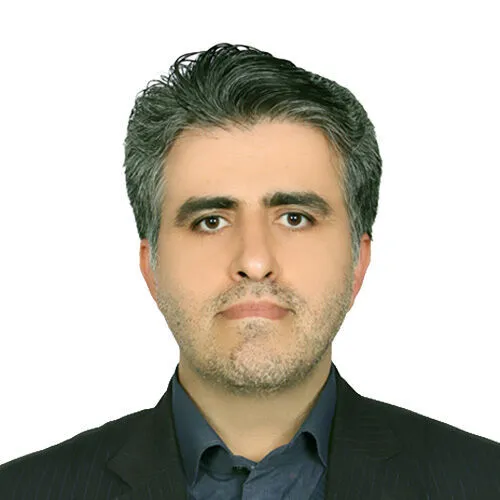
Seyed Mojtaba Hosseini Nasab
Assistant Professor
Iran University of Science and Technology (IUST)
S. Mojtaba Hosseini-Nasab, is assistant Professor of Petroleum Reservior Engineering at University of Science and Technology of Iran (IUST) and CEO of Intelligent Energy and Material Application., Inc. (IEMA). He is pioneer in the application of Artificial Intelligence and Machine Learning in the petroleum industry in IRAN, and also, he is expert in the area of Enhanced Oil Recovery (EOR) for around 20 years.
He got his PhD from Delft University of Technology (TU Delft), Netherlands with Shell Global Solution Co. He passed a Post-doctoral at the IFP Energies Nouvelles, Paris, France by collaboration with some pioneers of petroleum reservoir research scientists and engineers.
He has authored several papers and researches in the area of Data Driven Reservoir Modeling and History Matching, Lithology Classification and Rock-Typing, Application of Data-Driven Analytics for the Geological Storage of CO2, Smart Proxy Modeling.
Also, more than 30 technical papers in the area of Enhanced Oil Recovery (EOR), conformance control and reservoir simulation and modelling and carried out more than 15 projects for industry such as, NIOCs and NISOC, IOOC, KEPCO and private companies.
Participates in
TECHNICAL PROGRAMME | Primary Energy Supply
This research investigates how variations in operational and fluid parameters—including nanoparticle type and concentration, gas composition (pure and hybrid gases), and injection rate—influence foam generation, stability, and propagation behavior in porous carbonate media. Special attention is given to how these factors modulate the rheological characteristics of foams, alter interfacial properties, and affect dynamic displacement behavior, including pressure drop profiles and movement of the displacement front.
The experimental phase will employ custom-designed nanofluid formulations using representative carbonate rock samples in core flooding tests. Complementary interfacial property measurements will quantify foam–rock interactions under varying temperature, pressure, and salinity conditions representative of reservoir environments. The study aims to characterize how nanoparticle–surface interactions affect foam durability, CO₂ trapping efficiency, and residual oil saturation during multiphase flow through complex pore networks.
In parallel, insights from recent advances in multiphase transport modeling and nanoparticle-enhanced interfacial science will be incorporated to support the development of mechanistic understanding and injection optimization strategies. Ultimately, this work seeks to establish a systematic framework for tailoring nanofluid-assisted gas injection processes that improve oil displacement performance while facilitating safe and reliable geological storage of CO₂.
The proposed study contributes to developing more efficient, scalable, and environmentally responsible technologies for subsurface energy applications by bridging experimental observations with engineering design principles. The outcomes are expected to support the deployment of next-generation EOR techniques that simultaneously address production efficiency and carbon management objectives—an essential step toward more sustainable hydrocarbon operations within the global energy transition.