


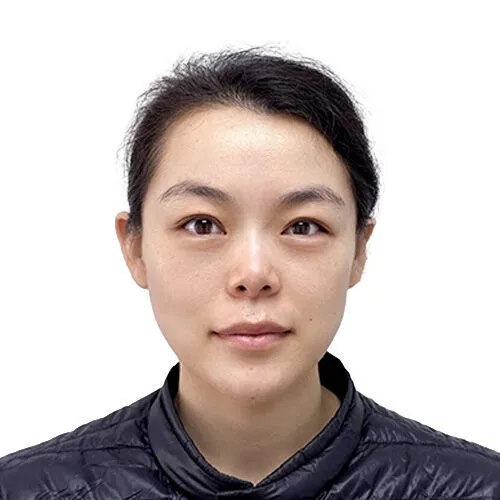
Lina Yi
Petroleum Development Engineer
China National Petroleum Corporation
China
Yilina, 40 years old, PhD, Senior Engineer, graduated from the University of Chinese Academy of Sciences. She is currently employed at the Research Institute of Exploration and Development, China National Petroleum Corporation. She has long been engaged in the theoretical and technological research on enhancing oil recovery using microorganisms and biological products. She has presided over and participated in 4 national-level projects, as well as more than 20 provincial -level projects. Her academic and technological achievements include 2 provincial-level awards, 1 authorized Chinese invention patent, and over 20 published academic papers.
The main research contents: Microbial enhanced oil recovery(MEOR) using internal and external microorganisms, enhanced oil recovery(EOR) using microbial products, Microbial wax removal-prevention products, and fermentation of biosurfactants and biopolymers.
The main achievements:
1 Oil displacement agent R&D: 5 oil displacement systems have been developed, including integrated surface-underground MEOR system, biosurfactant oil displacement agent, biopolymer oil displacement agent, biological/chemical composite oil displacement system, and activated water flooding composite bacterial agent. The independently developed biopolymer fermentation broth has a biopolymer content of 30g/L, and the biosurfactant fermentation broth has a rhamnolipid yield of 60g/L.
2 Mechanism research: Deepened two mechanisms, namely the temperature and salt resistance of scleroglucan and the synergy between biological/chemical surfactants. The temperature and salt resistance mechanism of scleroglucan was clarified from the perspectives of its molecular rigid structure, internal and external molecular forces, and dynamic shear three-dimensional network. The synergy mechanism of biological/chemical surfactants was studied using three thermodynamic evaluation index systems including the Gibbs free energy of mixed micelles.
3 Frontier Technology research: Established synthetic biology gene editing technology for oil displacement agent-producing strains, developed a CRISPR-CAS9 gene editing method for Bacillus subtilis, realized the construction of key synthetic biology technologies, and increased the gene editing rate of Bacillus subtilis by 5 times.
Participates in
TECHNICAL PROGRAMME | Primary Energy Supply
Integrated surface-subsurface microbial enhanced oil recovery(ISSM-EOR) represents an iterative advancement over conventional Indigenous/Exogenous microbial enhanced oil recovery(MEOR) technology. By integrating surface-based microbial cultivation phases with in situ metabolic processes in oil reservoirs, ISSM-EOR emphasizes enhancing microbial/metabolite concentrations through surface platforms that enable real-time monitoring and simplified control. Some of the surface-based cultivation procedures can also carry out microbial degradation of the crude oil in produced fluids extracted from oil wells.
In a pilot test of ISSM-EOR in China, Bacillus subtilis fermentation was conducted using a simplified near-wellbore process at injection sites. Non-target bacterial growth was suppressed through optimized fermentation parameters under non-sterile conditions, such as elevating the temperature to 42°C. The total bacterial concentration in the simplified fermentation broth reached 109 cells/mL, with target strain dominance exceeding 90%. The surfactant concentration metabolized by Bacillus subtilis exceeded 5 g/L, only 35% lower than that achieved in industrial-scale fermentation facilities. Huff-and-puff operation at 2 oil Well yielded 12,974 barrels of incremental oil production per cycle.
In an extended application of ISSM-EOR, produced water is reinjected into injection wells, thereby integrating microbial treatment of oil-containing produced water into the surface-based process. The surface system comprises three reaction tanks: an oil-removal conditioning tank, a fermentation reactor, and a sedimentation basin. In the oil removal tank, strains of crude oil-degrading bacteria mainly consisting of Candida viswanathii were introduced to achieve the purpose of purifying water quality. Fermentation tanks are inoculated with Pseudomonas aeruginosa strains for biomass cultivation and rhamnolipid biosynthesis. To date, this technology has been deployed across 200+ wells in China's Changqing Oilfield. In a pilot block at Changqing, 9 of 14 treated wells demonstrated production increases, with cumulative incremental production reaching 40,285 barrels between 2011-2019. Key performance metrics include: natural decline rate decreased from 15.4% to 0.4%, stage-enhanced oil recovery increased by 4.2%.
ISSM-EOR is an innovative MEOR methodology developed through systematic analysis of the primary oil-displacement mechanisms in conventional indigenous/exogenous MEOR systems. This technology integrates a dedicated surface-based cultivation phase, offering enhanced technical advantages: precision-controlled bioprocess conditions, high-purity metabolite yields, environmental friendliness, low cost. These attributes demonstrate significant potential for industrial scalability, particularly in mature oilfields.