


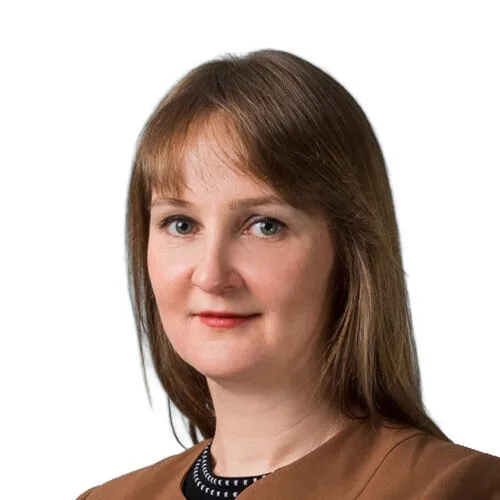
Vera Solovyeva
Technology Thrust Champion
Aramco Innovations
Russia
Ph.D. Vera Solovyeva is a Functional Nanomaterials Thrust Campion of with 7+ years of experience in the oil and gas industry. She graduated with a Ph.D. degree in chemistry from Lomonosov Moscow State University, Russia. Prior to her appointment as a Technology Thrust Champion at Aramco Innovations, Dr. Solovyeva spent several years in Saudi Arabia working as a Postdoc at KAUST University. Before developing her international research career, Dr. Solovyeva held various research positions in Russian Industrial R&D sector: Senior Research Scientist in drug design and customized pharmaceutical synthesis for Ely Lilly, Novartis, and other Big Pharma customers at the Russian subsidiary of global biotech company ChemDiv; Researcher at the US-Russian computer-based drug design company Algodign (2002-2005), founded by Nobel Prize laureate M. Levitt.
Participates in
TECHNICAL PROGRAMME | Primary Energy Supply
This study aims to develop a simple and precise method for exploring hydrocarbon deposits and monitoring underground gas content by screening vapors produced through subsurface microseepage. By analyzing the content and composition of volatile organic compounds (VOCs), we seek to identify markers indicative of oil and gas fields.
Methods, Procedures, Process:
We fabricated three types of sensors utilizing specific porous carbon sorbents—carbon nanotubes, engineered activated carbon, and commercial activated carbon-based sorbent. These sensors were deployed in an exploration field for one month to adsorb VOCs from subsurface microseepage. Subsequent thermal desorption and high-resolution comprehensive two-dimensional gas chromatography-mass spectrometry (HR-GCxGC-MS) analyses enabled detailed separation and identification of the complex analyte mixtures.
Results, Observations, Conclusions:
Among various tested porous carbon nanomaterials, activated carbons, and porous polymers, three top-performing materials were selected for sensor development. Laboratory evaluations demonstrated that the optimal sensors could adsorb and detect over 130 volatile compounds from natural oil samples in microseeps. Field deployments revealed that these sensors accumulated and identified more than 300 VOC markers, including alkanes, alkenes, alicyclic and aromatic hydrocarbons, esters, and N,S,O-heteroatom-containing organic derivatives. HR-GCxGC-MS analyses distinguished biogenic contaminants, anthropogenic compounds, and authentic markers of subsurface hydrocarbon deposits. Comparative chromatographic analyses across exploration sites facilitated the identification of critical zones containing primary oilfield deposit markers. Hierarchical clustering of the GC-MS data enabled grouping of exploration spots based on VOC profiles, aiding in the prediction of potential oil-bearing sites.
Novel/Additive Information:
This study introduces a novel workflow that combines custom sensor-based accumulation of hydrocarbon VOC markers with high-resolution GCxGC-MS analysis. This approach enhances the detection of prospective drilling sites, thereby contributing valuable insights to the field of geochemical exploration.
Co-author/s:
Maxim Orlov, Program Director, Aramco Innovations LLC - Aramco Research Center – Moscow.
Roman Borisov, Senior Scientist, TIPS RAS.
Dr. Ibrahim Atwah, Lead Geologist, Saudi Arabian Oil Company.