


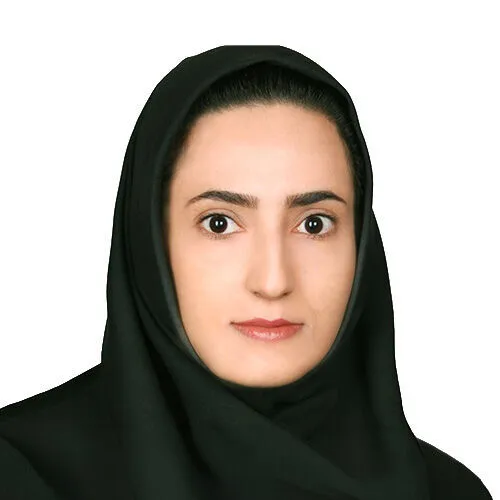
Soheila Zandi Lak

Researcher in Chemical Engineering

Department of Chemical Engineering, Shiraz University, Shiraz, Iran

Soheila Zandi Lak is a Ph.D. candidate in Chemical Engineering at Shiraz University, Iran. Her research lies at the intersection of process engineering, sustainable energy systems, and advanced fuel technologies, with a particular emphasis on bioenergy conversion, natural gas processing, hydrogen production, catalytic materials, and process optimization. Her academic activities include experimental research, modelling and simulation, and the development of innovative processes for energy-efficient and sustainable fuel production.
Her scholarly contributions include several book chapters and research works published by Elsevier, covering a breadth of topics such as syngas production from agricultural residues, thermochemical conversion processes, municipal waste valorization, algal biofuels, energy storage technologies, and advanced natural gas processing systems. She has also contributed to comprehensive works on hydrogen purification technologies, autothermal reforming, tri-reforming of natural gas, and membrane-assisted methanol synthesis. These publications demonstrate her ability to bridge fundamental principles of chemical reaction engineering, thermodynamics, and transport phenomena with practical, technology-oriented solutions for the energy sector.
In addition to her scientific research, she has extensive experience as an author, reviewer, and editor with leading international publishers such as Elsevier, Wiley, and Taylor & Francis (CRC Press). This professional engagement reflects her commitment to advancing high-quality scientific communication and contributing to the development of authoritative reference materials in the fields of renewable energy, chemical process design, and fuel technologies.

Participates in

TECHNICAL PROGRAMME | Primary Energy Supply

Natural Gas as a Transition Fuel
Forum 04 | Digital Poster Plaza 1
29
April
14:00 16:00
UTC+3
The storage and transportation of liquefied methane, particularly in the form of Liquefied Natural Gas (LNG), has become an integral part of the global energy infrastructure. This paper examines the technological advancements in the storage, transportation, and environmental management of liquefied methane. With growing concerns about climate change and the need for low-carbon energy alternatives, LNG stands as a viable solution, offering a cleaner fuel compared to conventional fossil fuels. The paper discusses key aspects such as the liquefaction process, which significantly reduces methane's volume, thereby facilitating its long-distance transportation at a lower cost. Moreover, it highlights the environmental implications of LNG, focusing on greenhouse gas emissions associated with its lifecycle—from production and liquefaction to transportation and consumption. Additionally, the paper explores the safety concerns related to LNG storage, emphasizing the risks of boil-off gas (BOG) during transportation and the engineering solutions implemented to manage these challenges. It concludes with a forward-looking perspective on the future of LNG, considering the increasing demand for this clean energy source and the ongoing innovations aimed at enhancing its efficiency and safety. The development of more efficient storage systems and transportation technologies is crucial for ensuring the sustainability of LNG as a key energy carrier in the coming decades.

TECHNICAL PROGRAMME | Primary Energy Supply

The Role of Biofuels as a Feedstock
Forum 06 | Digital Poster Plaza 1
30
April
12:00 14:00
UTC+3
Microbial fuel cells (MFCs) represent a promising and sustainable technology for the conversion of bioenergy resources, particularly in the areas of wastewater treatment and biohydrogen production. By leveraging the metabolic activities of microorganisms, MFCs offer a unique method for generating electricity through the oxidation of organic substrates. Recent innovations have enabled the enhancement of MFC performance, such as optimizing microbial consortia, electrode materials, and environmental conditions, to achieve higher energy outputs and Coulombic efficiency. In addition to their application in energy production, MFCs are increasingly recognized for their role in addressing wastewater treatment challenges, effectively degrading organic compounds and reducing the environmental footprint of industrial effluents. Furthermore, MFCs can be adapted to produce biohydrogen, a valuable alternative fuel, by utilizing electrochemical processes that overcome thermodynamic barriers. The integration of MFCs into bioenergy systems represents a transformative approach, utilizing organic waste as a resource for both energy generation and environmental remediation. These advancements underscore the potential of MFCs in contributing to the global transition towards sustainable energy solutions, offering a versatile and eco-friendly alternative to traditional power generation methods.

Keywords: Biohydrogen, Biomass conversion, Microbial fuel cells (MFCs), Wastewater treatment, Renewable energy.

Co-author/s:

Mohammad Reza Rahimpour, Professor of Chemical Engineering, Department of Chemical Engineering, Shiraz University.

Fatemeh Haghighatjoo, Researcher in Chemical Engineering, Department of Chemical Engineering, Shiraz University.

Eng. Maryam Koohi-Saadi, Researcher in Chemical Engineering, Department of Chemical Engineering, Shiraz University.