


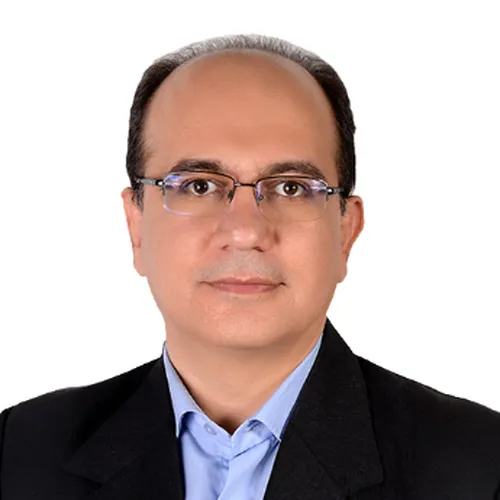
Hassan Aghdasinia
Associate Professor
University of Tabriz
Iran
Dr. Hassan Aghdasinia holds a Ph.D. in Chemical Engineering from the University of Tehran, where his doctoral research focused on the management and treatment of produced water associated with oil and gas production. He is currently an Associate Professor in the Faculty of Chemical Engineering and Petroleum Engineering at the University of Tabriz.
His professional expertise lies in the design and analysis of oil, gas, and petrochemical processes, with a strong emphasis on techno-economic feasibility studies of industrial projects. Over the past years, he has been actively involved in both academic and applied research related to process design, optimization, and sustainability assessment in the energy sector.
Dr. Aghdasinia’s main research interests include separation processes, transport phenomena, and environmental engineering challenges relevant to the process industries. A significant part of his work is dedicated to water and wastewater treatment, using chemical (AOP, photocatalytic,...) and physical (adsorption, membrane, ...) processes, particularly in the context of oil and gas operations, produced water management, and pollution control. His research aims to develop efficient, economically viable, and environmentally sustainable solutions for complex industrial separation and treatment problems.
He has authored and co-authored several scientific publications and has contributed to research and consultancy projects bridging academia and industry. Through his teaching and research activities, he seeks to advance sustainable process engineering practices and to train the next generation of chemical and petroleum engineers.
Participates in
TECHNICAL PROGRAMME | Primary Energy Supply