
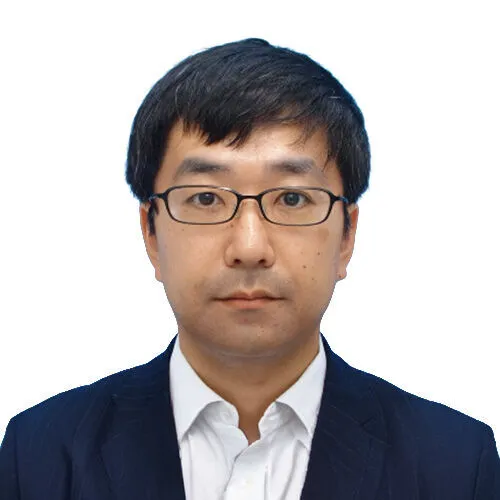
Takao Nibe
Manager
JAPEX
Japan
Dr. Takao Nibe is a geophysicist in the Carbon Neutral Technology Department, Technical Division, at Japan Petroleum Exploration Co., Ltd. (JAPEX), where he leads the development of CCS monitoring technologies. He joined JAPEX in 2009 and previously worked at JGI, a subsidiary of JAPEX, where he was involved in seismic data acquisition and processing from 2009 to 2018.
After returning to JAPEX, he expanded his expertise into seismic inversion, rock physics modeling, and fiber-optic sensing technologies. He earned his Ph.D. from the University of Tokyo in 2022, where his research focused on seismic attenuation and time-lapse monitoring in geothermal fields.
With JAPEX’s growing involvement in coastal CCS projects, he plays a key role in designing cost-effective monitoring strategies. He also initiates and manages R&D activities related to geophysical monitoring, including time-lapse DAS-VSP field experiments toward field-scale CCS deployment and the application of DAS to microseismic monitoring.
Participates in
TECHNICAL PROGRAMME | Primary Energy Supply
Tanase et al. (2021) showed the technical feasibility of monitoring in coastal environments for the Tomakomai CCS demonstration project. However, as Japan moves toward larger-scale, long-term practical CCS operations there is a growing need for more optimized and cost-effective monitoring strategies.
One promising solution for coastal CCS monitoring is Distributed Acoustic Sensing with Vertical Seismic Profiling (DAS-VSP). This technique enables imaging within the shoreline-adjacent transition zone and may reduce or even eliminate reliance on conventional Ocean Bottom Cables (OBCs). While permanently installed fiber, either behind casing or along tubing, is ideal for long-term surveillance, wireline DAS-VSP offers a practical alternative, allowing repeated surveys through existing wells. In 2022 and 2023, we conducted time-lapse wireline DAS-VSP experiments in wells completed over 50 years ago, successfully confirming the technical feasibility of this method for time-lapse monitoring. As such, this approach may serve as an effective optional or supplementary monitoring technique.
Another cost-effective approach involves 3D seismic surveying using Ocean Bottom Nodes (OBNs). Unlike OBC systems, OBNs eliminate the need for extensive cabling, thereby inherently reducing costs. To further enhance efficiency, we employed a parallel geometry for air-gun shooting. The results validated the effectiveness of this configuration, suggesting it as a valuable cost-saving solution, particularly when operating with a limited number of OBNs.
Given the substantial variability in site-specific conditions across coastal CCS projects, a flexible, multi-modal monitoring strategy is essential. Our research introduces alternative approaches that depart from conventional practices and demonstrates their technical feasibility. These findings expand the toolkit of cost-effective monitoring options available for coastal CCS deployment.
Reference:
Tanase, D., Saito, H., Niiro, R., Honda, T., Mori, A., Wada, Y., Higuchi, K., and Tanaka, J. (2021): Progress of CO2 injection and monitoring of the Tomakomai CCS Demonstration Project, Proceedings of the 15th International Conference on Greenhouse Gas Control Technologies, GHGT-15.