


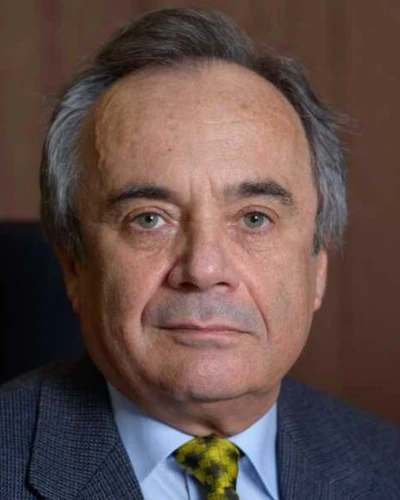
Victor Mocanu
Vice President, Exploration
Tender Oil & Gas
Victor Mocanu is professor of Geosciences at the University of Bucharest, with 40 year of experience in both fundamental and applied aspects of energy resources. He has decades of experience in academic and professional associations management, including the GetEnergy Award for academic-industry partnership. His interest in Africa (in general) and West Africa (in particular) materialized in numerous projects targeting the economic development of this part o the world, especially in energy domains.
Participates in
TECHNICAL PROGRAMME | Energy Infrastructure
Navigating the Future: Innovations & Market Dynamics in LNG, FLNG, & CNG
Forum 07 | Digital Poster Plaza 2
27
April
15:30
17:30
UTC+3
The four West African countries member of OMVG organization: Senegal, The Gambia, Guinea-Bissau and Guinea face severe slow-down of their economic development due to the severe limitation of the available electricity. This also represent a major challenge for daily life of the citizens and an obstacle against general development. The severe limitations were addressed by temporary solutions which proved to be expensive, less clean that necessary in our modern world and definitely not sufficient, like a powership of 35 MW.
The OMVG project is a 226KV transmission line within the West African Power Pool that connects the four member states and forms a critical project in the implementation roadmap of the power pool infrastructure.
The LNG terminal will be modular (possibly an FSRU – floating storage and regasification unit, or onshore tanks + evaporators), initially sized to provide the fuel needed for the plant and serve other industrial consumers. The liquefied gas will be imported by sea and stored/re-gasified at the terminal, then transported to the power plant via a short pipeline. Industrial LNG distribution will be achieved either by expanding a local gas network or by a "virtual pipeline" – i.e. delivering LNG with ISO cryogenic tankers to large industry consumers, who will re-gasify it at its destination. This flexible approach ensures the supply of gas to off-grid units such as factories, mining or transport, helping to replace diesel and butane with a cleaner, cheaper fuel available through long-term supply contracts.
Taking the example of one of the countries with the most serious electricity supply problem, the project will provide Guinea-Bissau with a reliable source of electricity and fuel: the 60 MW plant almost doubles the available capacity compared to the current level (~30–35 MW needed in Bissau), covering current demand and future increases. This will reduce dependence on fuel oil imports and unpredictable and seasonal hydropower, aligning with governments' strategy to reduce dependence on diesel and increase access to modern energy. Natural gas also has lower CO₂ emissions and local pollutants than the fuels currently used, contributing to climate and environmental goals. The importance of the gas transition in the regional energy mix is already recognised – for example, the first floating LNG plant recently came into operation in Senegal, marking a turning point in West Africa's energy transition.
The Bissau LNG project would position Guinea-Bissau as a pioneer in the region in the adoption of natural gas for energy production and industrial fuel, while catalyzing economic development (reliable energy for industry, possibility of boosting mining projects, cement, agri-food processing, etc.).
Selected bibliography:
Hannah Ritchie and Max Roser (2020) - "Energy". Published online at OurWorldInData.org. Retrieved from: https://ourworldindata.org/energy
IEA Statistics Report (2021) - “Natural Gas Overview: Information”. Published online from: https://www.iea.org/reports/natural-gas-information-overview
Co-author/s:
Teodor Ovidiu Tender, President, Tender Oil & Gas.
Alexandru Boscaneanu, General Director, Prospectiuni.
Dr. Jean Gorie, Guest Professor, University of Bucharest
The OMVG project is a 226KV transmission line within the West African Power Pool that connects the four member states and forms a critical project in the implementation roadmap of the power pool infrastructure.
The LNG terminal will be modular (possibly an FSRU – floating storage and regasification unit, or onshore tanks + evaporators), initially sized to provide the fuel needed for the plant and serve other industrial consumers. The liquefied gas will be imported by sea and stored/re-gasified at the terminal, then transported to the power plant via a short pipeline. Industrial LNG distribution will be achieved either by expanding a local gas network or by a "virtual pipeline" – i.e. delivering LNG with ISO cryogenic tankers to large industry consumers, who will re-gasify it at its destination. This flexible approach ensures the supply of gas to off-grid units such as factories, mining or transport, helping to replace diesel and butane with a cleaner, cheaper fuel available through long-term supply contracts.
Taking the example of one of the countries with the most serious electricity supply problem, the project will provide Guinea-Bissau with a reliable source of electricity and fuel: the 60 MW plant almost doubles the available capacity compared to the current level (~30–35 MW needed in Bissau), covering current demand and future increases. This will reduce dependence on fuel oil imports and unpredictable and seasonal hydropower, aligning with governments' strategy to reduce dependence on diesel and increase access to modern energy. Natural gas also has lower CO₂ emissions and local pollutants than the fuels currently used, contributing to climate and environmental goals. The importance of the gas transition in the regional energy mix is already recognised – for example, the first floating LNG plant recently came into operation in Senegal, marking a turning point in West Africa's energy transition.
The Bissau LNG project would position Guinea-Bissau as a pioneer in the region in the adoption of natural gas for energy production and industrial fuel, while catalyzing economic development (reliable energy for industry, possibility of boosting mining projects, cement, agri-food processing, etc.).
Selected bibliography:
Hannah Ritchie and Max Roser (2020) - "Energy". Published online at OurWorldInData.org. Retrieved from: https://ourworldindata.org/energy
IEA Statistics Report (2021) - “Natural Gas Overview: Information”. Published online from: https://www.iea.org/reports/natural-gas-information-overview
Co-author/s:
Teodor Ovidiu Tender, President, Tender Oil & Gas.
Alexandru Boscaneanu, General Director, Prospectiuni.
Dr. Jean Gorie, Guest Professor, University of Bucharest
