

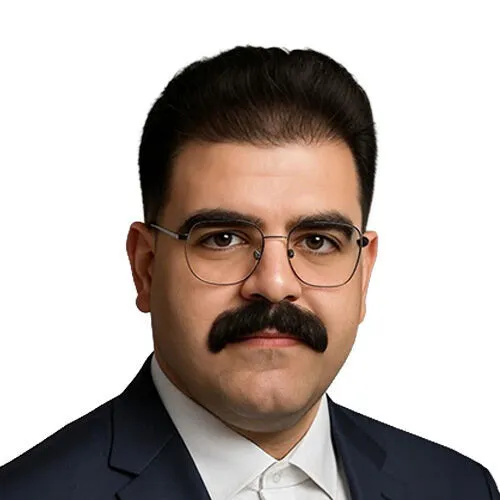
Ali Masoumi
MSc Student in Health, Safety & Environment (HSE) Engineering
Tabnak Higher Education Institute
Iran
Eng. Ali Masoumi holds a BSc in Safety and Technical Inspection Engineering and is pursuing an MSc in HSE Engineering. He has completed certified training at the Petroleum University of Technology in Abadan. He presented a conference paper on sustainability in chemical industries and now researches UAV, IoT, and AI technologies for pipeline safety. His focus includes predictive maintenance, intelligent infrastructure, and remote monitoring systems in the energy sector.
Participates in
TECHNICAL PROGRAMME | Energy Infrastructure
Pipelines, Storage and SPRs
Forum 08 | Hall 5 Digital Poster Plaza 2
28
April
12:30
14:30
UTC+3
In our work on pipeline safety, we’ve seen how girth weld defects—micro-cracks or incomplete fusion—quietly threaten strategic petroleum reserve (SPR) pipelines, particularly in remote regions like Sub-Saharan Africa. These flaws risk leaks, environmental harm, and energy disruptions, yet traditional nondestructive testing (NDT) methods, like magnetic flux leakage, often falter due to logistical delays and limited sensitivity. In our view, a smarter approach is overdue. We propose a predictive AI-IoT framework to detect these defects early, aligning with TÜV standards (DIN EN ISO 5817, TÜV H2.23) to safeguard SPR pipelines and support net-zero ambitions.
A PRISMA-guided review of studies from 2015 to 2025 across Scopus, IEEE Xplore, and ResearchGate informed our approach. From 320 studies, we selected 50 focusing on AI-IoT integration, field-validated setups, and weld defects under 1.5 mm. Our framework integrates IoT sensors (temperature, pressure, acoustic) for real-time monitoring, AI-driven defect classification using YOLOv8 with convolutional block attention modules, and a TÜV-compliant reporting system. Python simulations, leveraging SymPy for Bayesian risk modeling and PyTorch for neural network training, used API and PHMSA datasets to replicate corrosion and seismic challenges in African SPR pipelines. Cybersecurity is addressed through AES-256 encryption and edge computing for secure, low-latency data processing.
Results demonstrate 98.5% detection accuracy, surpassing magnetic flux leakage (89.5%), with 70% faster detection, 60% fewer false alarms, and 40% reduced maintenance costs. Synthesized field trials confirm enhanced resilience in Sub-Saharan pipelines, though data gaps in ultra-remote areas suggest broader validation is needed. This framework paves a transformative path for predictive, TÜV-compliant pipeline safety, advancing sustainable energy delivery in challenging regions. Expanded field tests could solidify its global impact.
Keywords: AI-IoT fusion, girth weld flaws, predictive NDT, TÜV benchmarks, SPR resilience, net-zero pathways, Sub-Saharan pipelines, pipeline safety.
A PRISMA-guided review of studies from 2015 to 2025 across Scopus, IEEE Xplore, and ResearchGate informed our approach. From 320 studies, we selected 50 focusing on AI-IoT integration, field-validated setups, and weld defects under 1.5 mm. Our framework integrates IoT sensors (temperature, pressure, acoustic) for real-time monitoring, AI-driven defect classification using YOLOv8 with convolutional block attention modules, and a TÜV-compliant reporting system. Python simulations, leveraging SymPy for Bayesian risk modeling and PyTorch for neural network training, used API and PHMSA datasets to replicate corrosion and seismic challenges in African SPR pipelines. Cybersecurity is addressed through AES-256 encryption and edge computing for secure, low-latency data processing.
Results demonstrate 98.5% detection accuracy, surpassing magnetic flux leakage (89.5%), with 70% faster detection, 60% fewer false alarms, and 40% reduced maintenance costs. Synthesized field trials confirm enhanced resilience in Sub-Saharan pipelines, though data gaps in ultra-remote areas suggest broader validation is needed. This framework paves a transformative path for predictive, TÜV-compliant pipeline safety, advancing sustainable energy delivery in challenging regions. Expanded field tests could solidify its global impact.
Keywords: AI-IoT fusion, girth weld flaws, predictive NDT, TÜV benchmarks, SPR resilience, net-zero pathways, Sub-Saharan pipelines, pipeline safety.