


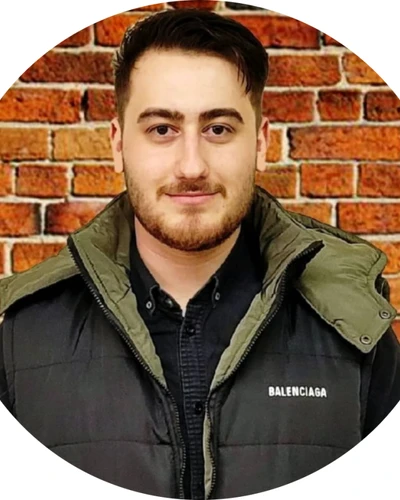
Amirhossein Molaei
MSc Graduate in Petroleum and Natural Gas Engineering
Sahand University of Technology
Amirhossein Molaei received his BSc and MSc degrees in Petroleum Engineering (Hydrocarbon Reservoirs) from the Islamic Azad University, Science and Research Branch, and Sahand University of Technology, respectively. Throughout his academic journey, he developed a strong interest in reservoir engineering, fluid behavior in porous media, and enhanced oil recovery (EOR) processes. His MSc research primarily focused on fluid–rock and fluid–fluid interactions, wettability alteration mechanisms, interfacial phenomena, and the fundamental principles that govern the performance of EOR methods in hydrocarbon reservoirs. He has worked with a range of laboratory and analytical techniques to evaluate the efficiency of different recovery processes and the role of nanomaterials in improving reservoir performance.
Amirhossein has authored and co-authored several research papers in national and international journals and conferences, addressing key challenges in petroleum engineering such as improving oil recovery, understanding multi-phase flow in porous media, and exploring innovative materials for subsurface applications. His scientific contributions reflect his dedication to advancing both theoretical and practical aspects of reservoir engineering.
In addition to his academic commitments, he has collaborated on multiple research and industrial projects at the Sahand Oil and Gas Research Center, where he gained hands-on experience with core analysis, EOR evaluations, and related experimental workflows. These experiences helped him strengthen his technical background and build a deeper understanding of real-world challenges in the oil and gas industry.
Currently, Amirhossein works as a Project Control Engineer at Chegalesh Consulting Engineers, contributing to the development project of the Tehran Oil Refinery. In this role, he is involved in planning, scheduling, progress monitoring, cost control, and coordination across various engineering disciplines. His combined experience in petroleum engineering and project control provides him with a comprehensive perspective on both the technical and managerial aspects of energy-related projects.
His research interests include enhanced oil recovery, reservoir simulation, wettability modification, multiphase flow in porous media, foam and nanomaterial applications, and the integration of academic research with industrial needs. Amirhossein aims to continue contributing to the advancement of petroleum engineering by bridging the gap between scientific innovation and practical field applications.
Participates in
TECHNICAL PROGRAMME | Energy Infrastructure
Keywords: CCUS, CO₂ foam, Gas mobility control, Heterogeneous reservoirs, EOR, Subsurface CO₂ Storage.
Co-author/s:
Mohammad Simjoo, Associate Professor, Sahand University of Technology.
