


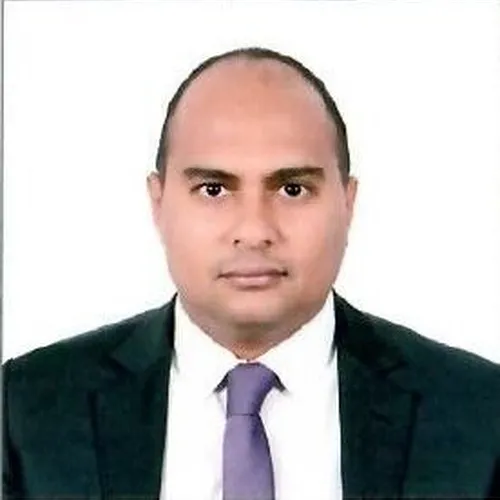
Khaled Hussein Khallaf
Technical Planning Engineer
Egyptian Gas Regulatory Authority
Egypt
- Results-driven senior engineer and regulatory leader with 20+ years of experience spanning gas network regulation, SCADA systems engineering, and energy market reform.
- Demonstrated expertise in hydraulic pipeline simulation, digital transformation, EU gas market codes, and capacity-building across the Mediterranean region.
- Executive General Manager at Egyptian natural gas company - GASCO's SCADA division.
- As Part Time- Technical Planning General Manager at the Egyptian Gas Regulator (GASREG).
- Holds a Master's degree (Excellent grade) in Communication & Electronics Engineering from Cairo University.
- Hold a Diploma in Energy Regulation from school of Florence.
- GASREG's representative in MEDREG and ERRA renewable energy workgroups.
- Author of peer-reviewed publications and recipient of multiple high-level ministerial awards.
Participates in
TECHNICAL PROGRAMME | Energy Infrastructure
Hydrogen Transportation
Forum 10 | Hall 5 Digital Poster Plaza 2
14
October
14:00
16:00
UTC+3
As Egypt advances its energy strategy and moves toward becoming a regional energy hub, integrating hydrogen into the natural gas infrastructure is a strategic priority within the national hydrogen plan. This paper explores the technical feasibility, operational challenges, international benchmarks, and strategic opportunities for hydrogen delivery in Egypt’s gas networks, focusing on both low-level blending and the transition toward dedicated hydrogen systems.
Hydrogen’s unique physical and chemical properties—high diffusivity, low density, and wide flammability range—pose challenges when mixed with natural gas. These include reduced energy content per unit volume, increased flow velocity, potential material degradation, and heightened safety considerations. The analysis covers two main scenarios: blending hydrogen with natural gas at up to 20% by volume and developing 100% hydrogen transport corridors. Each scenario is assessed in terms of technical performance, regulatory requirements, contractual adjustments, and environmental impacts.
A review of Egypt’s gas network reveals regulatory and technical gaps that must be addressed to ensure safe and efficient hydrogen integration. International experiences from Germany, the Netherlands, Japan, and South Korea show the value of standardized pipeline materials, advanced leak detection, and continuous gas composition monitoring. Case studies such as HyDeploy (UK), HyNet North West (UK), and HyStock (Netherlands) demonstrate practical lessons in scaling hydrogen blending, integrating storage, and coordinating multi-stakeholder governance.
To quantify operational impacts, the Synergi Gas simulation platform was used to model the effects of hydrogen blending on pipeline hydraulics, pressure drops, flow velocities, and material compatibility. The results highlight the urgent need to upgrade legacy infrastructure, optimize pipeline diameters, reinforce compressor capacity, and install hydrogen-calibrated metering and regulation systems to maintain operational efficiency and safety.
The environmental and economic assessment indicates that hydrogen blending can contribute to emissions reduction and energy diversification but requires clear frameworks for implementation and robust monitoring strategies. Recommended actions include adopting hydrogen-compatible materials, expanding storage capacity—especially through salt cavern projects—decentralizing injection points to enhance system flexibility, and improving coordination between TSOs, DSOs, suppliers, shippers, regulators, and the Ministry of Petroleum.
For successful deployment, Egypt must update legal and technical standards to define blending limits, ensure infrastructure compatibility, and enforce hydrogen quality control. Coupled with investment planning, targeted economic incentives, and a strong governance model, these measures will encourage participation in the hydrogen value chain. With coordinated policy action, infrastructure modernization, and stakeholder engagement, Egypt can safely and efficiently adapt its gas network to support a low-carbon, hydrogen-enabled future.
Hydrogen’s unique physical and chemical properties—high diffusivity, low density, and wide flammability range—pose challenges when mixed with natural gas. These include reduced energy content per unit volume, increased flow velocity, potential material degradation, and heightened safety considerations. The analysis covers two main scenarios: blending hydrogen with natural gas at up to 20% by volume and developing 100% hydrogen transport corridors. Each scenario is assessed in terms of technical performance, regulatory requirements, contractual adjustments, and environmental impacts.
A review of Egypt’s gas network reveals regulatory and technical gaps that must be addressed to ensure safe and efficient hydrogen integration. International experiences from Germany, the Netherlands, Japan, and South Korea show the value of standardized pipeline materials, advanced leak detection, and continuous gas composition monitoring. Case studies such as HyDeploy (UK), HyNet North West (UK), and HyStock (Netherlands) demonstrate practical lessons in scaling hydrogen blending, integrating storage, and coordinating multi-stakeholder governance.
To quantify operational impacts, the Synergi Gas simulation platform was used to model the effects of hydrogen blending on pipeline hydraulics, pressure drops, flow velocities, and material compatibility. The results highlight the urgent need to upgrade legacy infrastructure, optimize pipeline diameters, reinforce compressor capacity, and install hydrogen-calibrated metering and regulation systems to maintain operational efficiency and safety.
The environmental and economic assessment indicates that hydrogen blending can contribute to emissions reduction and energy diversification but requires clear frameworks for implementation and robust monitoring strategies. Recommended actions include adopting hydrogen-compatible materials, expanding storage capacity—especially through salt cavern projects—decentralizing injection points to enhance system flexibility, and improving coordination between TSOs, DSOs, suppliers, shippers, regulators, and the Ministry of Petroleum.
For successful deployment, Egypt must update legal and technical standards to define blending limits, ensure infrastructure compatibility, and enforce hydrogen quality control. Coupled with investment planning, targeted economic incentives, and a strong governance model, these measures will encourage participation in the hydrogen value chain. With coordinated policy action, infrastructure modernization, and stakeholder engagement, Egypt can safely and efficiently adapt its gas network to support a low-carbon, hydrogen-enabled future.