


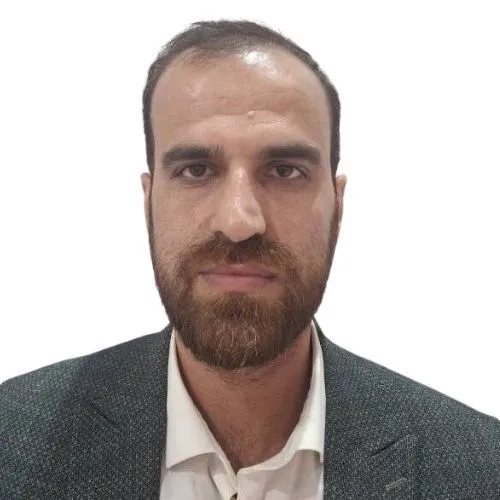
Mojtaba Babaei
Director
Iranian Petroleum Institute Accreditation Body (IPIAB)
Iran
Participates in
TECHNICAL PROGRAMME | Energy Infrastructure
Supply Chain Management
Forum 11 | Hall 5 Digital Poster Plaza 2
30
April
10:00
12:00
UTC+3
In the context of a rapidly evolving global energy landscape and the accelerating energy transition, it is essential for oil and gas companies to manage their supply chains in smarter, greener ways, leveraging digital technologies and artificial intelligence (AI). This paper focuses on a data-driven approach to supply chain management in the Iran oil and gas sector, using data generated from national quality infrastructure (NQI) systems.
NQI includes standardization, metrology, and accredited conformity assessment, forming a continuous cycle where standards are developed, measurements are harmonized, and conformity is verified and widely accepted. In Iran’s oil industry, two key institutions have been established and connected to the International Network on Quality Infrastructure (INetQI): the Iranian Petroleum Institute Accreditation Body (IPIAB) and the Iranian Petroleum Institute Certification Body (IPICB). IPIAB is responsible for accrediting laboratories and inspection companies based on ISO/IEC 17025 and ISO/IEC 17020, while IPICB certifies specialized oil and gas equipment and relevant personnel according to ISO/IEC 17065 and ISO/IEC 17024.
Because most specialized oil and gas equipment is custom-made, inspection and certification bodies play critical roles throughout the production cycle under Inspection & Test Plans (ITPs), often requiring the physical presence of inspectors (hold or witness points). This system significantly reduces the cultural and process costs of data generation, shifting the focus toward producing high-quality data.
The supply chain process begins with sourcing, which includes manufacturers, inspection providers, and laboratories. We have launched data generation at the sourcing stage using the “SAKHT” platform (Iran Petroleum Industry Development Services Platform), gradually integrating conformity assessment data to complete the supply chain information cycle.
In the second phase of this project, the collected data will undergo preprocessing and validation, followed by the application of a large language model (LLM) trained on these datasets, enabling comprehensive AI-driven analysis across all stages. This integrated approach will enhance supply chain management with a focus on quality, sustainability, and operational risk control, particularly under restricted international market access. Additionally, it will support regulatory efforts to manage strategic issues such as carbon footprint reduction.
Co-author/s:
Omid Shakeri, Deputy Minister of Petroleum for Engineering, Research and Technology, Ministry of Petroleum.
Mohammad Ali Emadi, General Director, Iranian Petroleum Institute.
NQI includes standardization, metrology, and accredited conformity assessment, forming a continuous cycle where standards are developed, measurements are harmonized, and conformity is verified and widely accepted. In Iran’s oil industry, two key institutions have been established and connected to the International Network on Quality Infrastructure (INetQI): the Iranian Petroleum Institute Accreditation Body (IPIAB) and the Iranian Petroleum Institute Certification Body (IPICB). IPIAB is responsible for accrediting laboratories and inspection companies based on ISO/IEC 17025 and ISO/IEC 17020, while IPICB certifies specialized oil and gas equipment and relevant personnel according to ISO/IEC 17065 and ISO/IEC 17024.
Because most specialized oil and gas equipment is custom-made, inspection and certification bodies play critical roles throughout the production cycle under Inspection & Test Plans (ITPs), often requiring the physical presence of inspectors (hold or witness points). This system significantly reduces the cultural and process costs of data generation, shifting the focus toward producing high-quality data.
The supply chain process begins with sourcing, which includes manufacturers, inspection providers, and laboratories. We have launched data generation at the sourcing stage using the “SAKHT” platform (Iran Petroleum Industry Development Services Platform), gradually integrating conformity assessment data to complete the supply chain information cycle.
In the second phase of this project, the collected data will undergo preprocessing and validation, followed by the application of a large language model (LLM) trained on these datasets, enabling comprehensive AI-driven analysis across all stages. This integrated approach will enhance supply chain management with a focus on quality, sustainability, and operational risk control, particularly under restricted international market access. Additionally, it will support regulatory efforts to manage strategic issues such as carbon footprint reduction.
Co-author/s:
Omid Shakeri, Deputy Minister of Petroleum for Engineering, Research and Technology, Ministry of Petroleum.
Mohammad Ali Emadi, General Director, Iranian Petroleum Institute.