


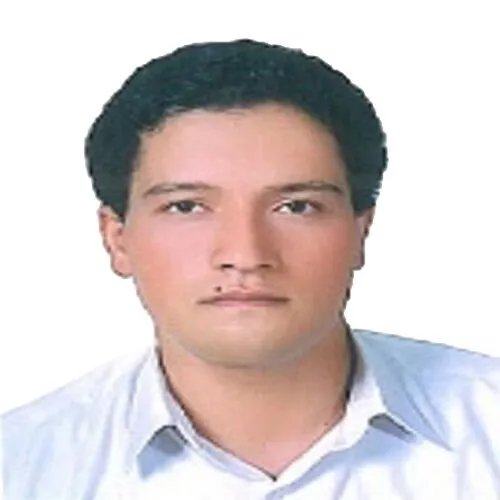
Seyyed Hadi Pourhoseini Hesari

Faculty Member (Associate Professor of Mechanical Engineering)

University of Gonabad

My name is Seyyed Hadi Pourhoseini Hesari, and I am an Associate Professor of Mechanical Engineering specializing in energy conversion at the University of Gonabad, where I have served for nearly ten years. I collaborate closely with Professor Antonio Ficarella from the University of Salento, as well as with my colleagues Associate Professor A. Karimian and Nahid Naghizadeh from the Department of Chemistry. Our research focuses on innovative studies related to nano-fuels, as well as the synthesis and application of biodiesel fuels derived from environmentally friendly and sustainable feedstocks for use in advanced combustion systems. To date, we have published our research findings in several high-quality, peer-reviewed journals such as Energy Conversion and Management, Renewable Energy, Fuel and Energy.

Participates in

TECHNICAL PROGRAMME | Primary Energy Supply

The Role of Biofuels as a Feedstock
Forum 06 | Technical Programme Hall 1
30
April
10:00 11:30
UTC+3
Diesel fuel is among the most important fossil fuels derived from crude oil, which has widespread applications in combustion systems such as diesel engines and industrial burners. The environmental challenges associated with diesel fuel and the limited and decreasing fossil fuel resources highlighted the need for environmentally friendly renewable alternative fuel. In recent years, biodiesel fuel has been introduced as a precursor and alternative to diesel fuel due to its high flash point and cetane number, combustion efficiency and characteristics very close to those of diesel fuel. Consequently, there is an effort among the researchers to improve biodiesel synthesis and production from new feedstocks and use high-performance methods. The aim of the present work is synthesis and production of biodiesel from algae as feedstock and comparison the advantages of using algae as biodiesel feedstock with conventional biodiesel feedstocks. Firstly, unlike other conventional biodiesel feedstocks such as palm oil, the algae are fast-growing (the growth period of algae is about 4 weeks). Secondly, unlike the conventional biodiesel feedstocks such as palm which grow in tropical rainforest such as Southeast Asia, they can grow and reproduce in different waters such as sewage, wastewater and different geographical conditions around the world and finally, unlike conventional oilseed biodiesel feddstocks such as Soybeans, Canola which are agricultural and farm products, algaes are non-competitive for agricultural land and the results shows that using SC-CO2 as new oil extraction method combined with RSM optimization of the parameters can enhance the oil extraction up to 37.9%. Also, it is possible to synthesis a green catalyst from algae to convert the oil into biodiesel using transesterification methods such which gives a biodiesel yield as much as 90%.

Co-author/s:

A. Kirimian, Faculty Member (Associate professor of Chemistry), University of Gonabad.

N. Naghizadeh, Laboratory Technician, University of Gonabad.

A. Ficarella, Faculty member ( Full Professor at department of Engineering for Innovation), University of Salento.