


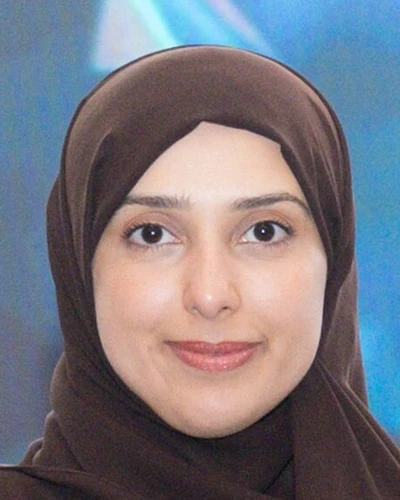
Zainab Alaithan
Senior Research Engineer
Saudi Aramco
Dr. Zainab holds a Ph.D. from Imperial College London, where she specialized in computational catalysis. With a deep interest in sustainable energy solutions and material science, her research primarily focuses on computational catalysts screening, as well as the upgrading and functionalization of carbon materials. Currently, she is working as a Senior Research Engineer, where she leads projects aimed at improving the efficiency and performance of catalytic processes.
Participates in
TECHNICAL PROGRAMME | Energy Fuels and Molecules
Fueling the Future: Innovations & Strategies for Tomorrow’s Electricity Supply
Forum 13 | Digital Poster Plaza 3
28
April
10:00
12:00
UTC+3
Background and motivation:
Hydrogen sulfide is a hazardous molecule naturally found in natural gas, biogas, and various industrial processes. Strict environmental regulations require over 99% sulfur recovery. To meet the stringent environmental regulations, the current industrial practice uses the Claus process to convert H2S to elemental sulfur and water. An alternative pathway is to convert H2S to sulfur and hydrogen. This transformation is important for protecting the environment and valuable hydrogen recovery. The challenges of working with H2S have limited our understanding of the catalytic H2S dissociation and consequently proper and rational catalyst development.
Materials and methods:
Computational design of new catalysts has recently accelerated the catalyst discovery process. We leverage the recent progress in computational catalysis and apply it to a challenging industrial process: H2S splitting to produce hydrogen. Throughout systematic density functional theory (DFT) calculations and detailed microkinetic modeling, the TOF of MoS2 was calculated and benchmarked against the experimental results of carefully synthesized and characterized catalysts. We also identify simple descriptors to screen transition metals, alloys, and metal sulfide catalysts quickly.
Results and discussion:
The results from our microkinetic model analysis indicate that the S-edge of 2 H-MoS2 with 1 ML sulfur coverage will perform better than the other investigated MoS2 surfaces. Moreover, the study shows that hydrogen coupling is the main controlling step in the reaction mechanism. Hence, different sulfides and dopants can be investigated and screened to reduce the hydrogen coupling and desorption barrier while maintaining a reasonable H2S decomposition barrier.
Co-author/s:
Zainab Alaithan, Research and Development Center, Dhahran.
Ali Almofleh, Research and Development Center, Dhahran.
Hassan Aljama, Research and Development Center, Dhahran.
Vijay K. Velisoju, Multiscale Reaction Engineering, KAUST Catalysis Center (KCC), King Abdullah University of Science and Technology (KAUST).
Hend O. Mohamed, Multiscale Reaction Engineering, KAUST Catalysis Center (KCC), King Abdullah University of Science and Technology (KAUST).
Gontzal Lezcano, Multiscale Reaction Engineering, KAUST Catalysis Center (KCC), King Abdullah University of Science and Technology (KAUST).
ldar Mukhambetov, KAUST Catalysis Center (KCC), King Abdullah University of Science and Technology (KAUST).
Pedro Castaño, Multiscale Reaction Engineering, KAUST Catalysis Center (KCC), King Abdullah University of Science and Technology (KAUST), Chemical Engineering Program, Physical Science and Engineering (PSE) Division, KAUST.
Hydrogen sulfide is a hazardous molecule naturally found in natural gas, biogas, and various industrial processes. Strict environmental regulations require over 99% sulfur recovery. To meet the stringent environmental regulations, the current industrial practice uses the Claus process to convert H2S to elemental sulfur and water. An alternative pathway is to convert H2S to sulfur and hydrogen. This transformation is important for protecting the environment and valuable hydrogen recovery. The challenges of working with H2S have limited our understanding of the catalytic H2S dissociation and consequently proper and rational catalyst development.
Materials and methods:
Computational design of new catalysts has recently accelerated the catalyst discovery process. We leverage the recent progress in computational catalysis and apply it to a challenging industrial process: H2S splitting to produce hydrogen. Throughout systematic density functional theory (DFT) calculations and detailed microkinetic modeling, the TOF of MoS2 was calculated and benchmarked against the experimental results of carefully synthesized and characterized catalysts. We also identify simple descriptors to screen transition metals, alloys, and metal sulfide catalysts quickly.
Results and discussion:
The results from our microkinetic model analysis indicate that the S-edge of 2 H-MoS2 with 1 ML sulfur coverage will perform better than the other investigated MoS2 surfaces. Moreover, the study shows that hydrogen coupling is the main controlling step in the reaction mechanism. Hence, different sulfides and dopants can be investigated and screened to reduce the hydrogen coupling and desorption barrier while maintaining a reasonable H2S decomposition barrier.
Co-author/s:
Zainab Alaithan, Research and Development Center, Dhahran.
Ali Almofleh, Research and Development Center, Dhahran.
Hassan Aljama, Research and Development Center, Dhahran.
Vijay K. Velisoju, Multiscale Reaction Engineering, KAUST Catalysis Center (KCC), King Abdullah University of Science and Technology (KAUST).
Hend O. Mohamed, Multiscale Reaction Engineering, KAUST Catalysis Center (KCC), King Abdullah University of Science and Technology (KAUST).
Gontzal Lezcano, Multiscale Reaction Engineering, KAUST Catalysis Center (KCC), King Abdullah University of Science and Technology (KAUST).
ldar Mukhambetov, KAUST Catalysis Center (KCC), King Abdullah University of Science and Technology (KAUST).
Pedro Castaño, Multiscale Reaction Engineering, KAUST Catalysis Center (KCC), King Abdullah University of Science and Technology (KAUST), Chemical Engineering Program, Physical Science and Engineering (PSE) Division, KAUST.
