


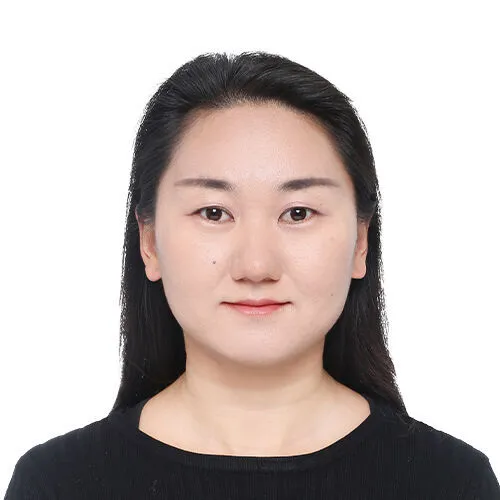
Yue Wang

Senior Engineer

CNPC

Dr. Wang has been working in the energy sector for seven years and currently serves as a Senior Engineer at China National Petroleum Corporation (CNPC). She holds a Ph.D. degree in Chemical Engineering and Technology from Tsinghua University, complemented by a one-year research stint at the Massachusetts Institute of Technology (MIT). Since completing her doctorate, Dr. Wang has dedicated her career to the energy industry, with a focus on: clean diesel fuel technologies , hydrogen energy (production, storage, and utilization) and ammonia as an energy carrier. Her expertise spans both traditional fossil fuel refinement and emerging zero-carbon energy solutions, positioning her at the forefront of energy transition research.

Participates in

TECHNICAL PROGRAMME | Energy Fuels and Molecules

Hydrogen (Green and Blue); Ammonia; Methanol
Forum 14 | Digital Poster Plaza 3
28
April
12:30 14:30
UTC+3
This study designs a renewable energy-powered hydrogen production via water electrolysis and low-temperature/low-pressure ammonia synthesis process using Aspen Plus simulation software, providing technical support for the construction and operation of a 10,000-ton/y-scale demonstration project. An alkaline electrolyzer was modeled using the ACM framework, achieving a hydrogen production capacity of 1000 Nm³/h. For the ammonia synthesis section, the REquil reactor model was employed to calculate the equilibrium reaction heat and component mole fractions within temperature (340–540°C) and pressure (7–20 MPa) ranges. Results indicate that the equilibrium reaction heat decreases with rising temperature but increases with elevated pressure. A comparative analysis of ruthenium-based, iron-based, and iron-ruthenium cascade catalysts revealed superior overall activity for ruthenium-based catalysts, while iron-based catalysts exhibited higher sensitivity to ammonia concentration. Considering operational costs and catalytic performance, the iron-ruthenium cascade system was selected for ammonia synthesis at 400°C and 7 MPa. Full-process material and energy balances were conducted to guide industrial-scale implementation. The material balance demonstrated an ammonia concentration of 21.88% at the synthesis reactor outlet, corresponding to a production rate of 1.25 t/h. Energy balance calculations indicated a specific energy consumption of ~11000 kWh/t NH₃, with electrolysis and compression identified as major energy-intensive units.

Co-author/s:

Hongzhi Chen, Chief System Scientist, Kunlun digital technology, CNPC.

Dr. Yue Zeng, Senior Engineer, CNPC.

Dr. Qingxun Li, Professor Level Engineer, CNPC.

Xiwen Song, Engineer, CNPC.