


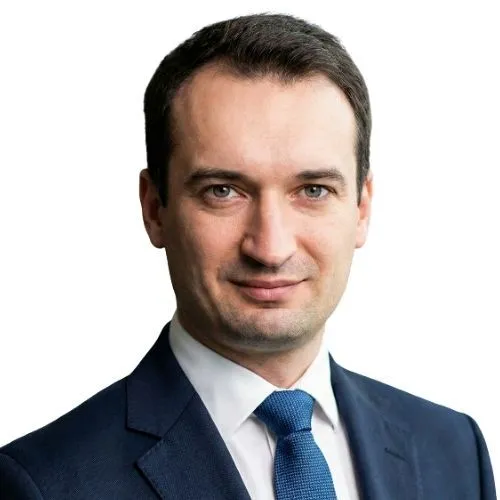
Kamil Klejna
Plenipotentiary for Biomethane
SITPNiG
Poland
Kamil Klejna is an energy sector expert with over a decade of experience in the oil, gas, and energy industries. His professional journey reflects the broader transformation of the sector itself—evolving from traditional fossil fuel extraction to a dedicated focus on Renewable Energy Sources (RES) and green gases.
For five years, Kamil represented Poland within the structures of the World Petroleum Council (WPC), where he served as Chair of the Polish Young Professionals Committee. During this tenure, he witnessed the organization’s pivotal rebranding to WPC Energy, a shift that mirrored his own professional pivot toward sustainable energy solutions.
Currently, Kamil specializes in the development of the biomethane market in Poland. He serves as the Plenipotentiary for Biomethane at the Scientific and Technical Association of Engineers and Technicians of the Oil and Gas Industry (SITPNiG). In this capacity, he is actively involved in the Sectoral Agreement for Biogas and Biomethane, working to create regulatory and technical solutions that support the growth of this critical sector.
His background combines geology, finance, and artificial intelligence—competencies he utilized for years at PGNiG to evaluate major mining and energy investment projects valued at up to 4 billion PLN. Today, he leverages this analytical expertise to champion biomethane as a key pillar of energy security and decarbonization.
Passionate about education and knowledge sharing, Kamil is the creator and host of the podcast "Czas na zielony gaz" (Time for Green Gas), where he discusses the future of energy with leading industry experts.
Participates in
TECHNICAL PROGRAMME | Primary Energy Supply
Repurposing gas fields with residual production could offer asset owners the opportunity to monetize remaining resources, defer decommissioning costs, and preserve the value of infrastructure. For biomethane investors, it could provide access to grid connections, land, and facilities that reduce capital expenditure and accelerate project timelines. At the same time, these projects could meaningfully support climate objectives by increasing biomethane supply and demonstrate a pragmatic “brownfield-to-green energy” pathway.
The GBTI framework structures feasibility assessment across four key dimensions: technical, infrastructural, legal-regulatory, and environmental-social. It identifies clear strengths – such as existing grid access or favorable permitting regimes – while highlighting potential risks like small site size, equipment condition, or complex permitting procedures. At this stage, the Gas-to-Biomethane Index remains at the level of a conceptual framework, but it illustrates how systematic and transparent evaluation could guide portfolio reviews, capital allocation, and stakeholder communication in the upstream sector.
Although initially developed in the Polish context, the methodology can be adapted for other regions facing similar challenges in managing late-life oil and gas assets. By embedding infrastructure reuse into corporate strategies, the Index is intended to support decarbonization while generating financial and operational synergies between upstream operators and renewable gas investors. Importantly, it has the potential to enhance ESG transparency by documenting decision-making processes in a structured way, thereby strengthening investor confidence and regulatory alignment.
Co-author/s:
Piotr Dziadzio, Vice President, SITPNIG.