


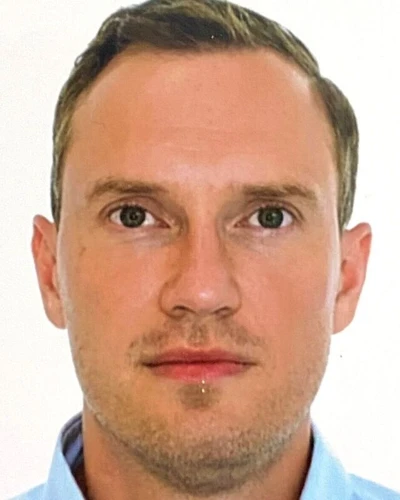
Daniel Schwappach
Head of Sustainable Energy Systems MEA
Siemens Energy
Daniel Schwappach is the Head of Sustainable Energy Systems for Middle East and Africa at Siemens Energy, based in Abu Dhabi since October 2022.
With over 14 years of experience in the power generation and hydrogen industry, he has held various national and international positions.
In his previous role, he led consulting solutions for energy system design and digital applications related to hydrogen and PtX business at Siemens Energy.
Daniel holds a diploma degree in Mechanical Engineering and a Master of Business Administration
Participates in
TECHNICAL PROGRAMME | Energy Fuels and Molecules
Alternative Fuels - E fuels, Biofuels and SAF
Forum 15 | Digital Poster Plaza 3
29
April
11:30
13:30
UTC+3
The mobility sector is a significant contributor to global greenhouse gas emissions, accounting for 23% of these emissions, which necessitates urgent decarbonization efforts. Green hydrogen and its derived fuels are seen as crucial solutions for reducing emissions in this sector. The International Maritime Organisation (IMO) has committed to halving greenhouse gas emissions from shipping by 2050, based on 2008 levels, to meet Paris Agreement targets. Similarly, the International Air Transport Association (IATA) aims to halve net emissions by 2050 compared to 2005 levels, which would mean a 65% reduction compared to 2019.
E-fuels, such as e-methanol and sustainable aviation fuels (SAF), are pivotal in this transition. In 2022, SAF production tripled to approximately 300 million liters, with over 130 renewable fuel projects announced by more than 85 producers across 30 countries. Despite this growth, SAF production remains a small fraction of total jet fuel consumption, highlighting the need for further scaling. E-methanol is also gaining traction, with over 200 methanol-fueled ships ordered globally. By 2035-2040, e-methanol is expected to reach price parity with traditional fuels like VLSFO, driven by regulatory penalties on fossil fuel use.
The development of e-fuels faces several challenges, including high initial investment costs due to the energy and capital-intensive nature of projects. The lack of standardized definitions for hydrogen and its derived fuels across regions could limit the global trade of e-fuels. Additionally, the absence of long-term offtake commitments creates uncertainty, delaying final investment decisions. To overcome these hurdles, a holistic approach involving incentives and support mechanisms is necessary to ensure sustained e-fuel production on scale.
Siemens Energy is actively involved in scaling e-fuels, contributing through system optimization, scaling and standardization of e-fuel plants, and highly automated mass manufacturing. The company is also engaged in several projects worldwide, such as the Haru Oni Pilot Project in Chile, which integrates wind energy for e-fuel production. Other projects include the Kassø Power-to-X initiative in Europe, which focuses on large-scale e-methanol production.
The Elyzer P-300 platform is designed for large-scale deployment, offering customized solutions with high plant efficiency and optimized design for fast installation and low maintenance costs. Siemens Energy's capacity growth plan includes ramping up electrolyser manufacturing to deliver large-scale electrolysis systems, with a target of 3 GW annual production capacity.
The market outlook for e-fuels is promising, but progress is needed. Leadership from governments and authorities is crucial for establishing regulations, quotas, and incentives. Attractive project financing conditions and binding commitments to mid/long-term offtake agreements are also essential. A globally agreed framework for certifying the source of e-fuel and risk-sharing mechanisms among green hydrogen ecosystem actors would further support the scaling of e-fuels.
E-fuels, such as e-methanol and sustainable aviation fuels (SAF), are pivotal in this transition. In 2022, SAF production tripled to approximately 300 million liters, with over 130 renewable fuel projects announced by more than 85 producers across 30 countries. Despite this growth, SAF production remains a small fraction of total jet fuel consumption, highlighting the need for further scaling. E-methanol is also gaining traction, with over 200 methanol-fueled ships ordered globally. By 2035-2040, e-methanol is expected to reach price parity with traditional fuels like VLSFO, driven by regulatory penalties on fossil fuel use.
The development of e-fuels faces several challenges, including high initial investment costs due to the energy and capital-intensive nature of projects. The lack of standardized definitions for hydrogen and its derived fuels across regions could limit the global trade of e-fuels. Additionally, the absence of long-term offtake commitments creates uncertainty, delaying final investment decisions. To overcome these hurdles, a holistic approach involving incentives and support mechanisms is necessary to ensure sustained e-fuel production on scale.
Siemens Energy is actively involved in scaling e-fuels, contributing through system optimization, scaling and standardization of e-fuel plants, and highly automated mass manufacturing. The company is also engaged in several projects worldwide, such as the Haru Oni Pilot Project in Chile, which integrates wind energy for e-fuel production. Other projects include the Kassø Power-to-X initiative in Europe, which focuses on large-scale e-methanol production.
The Elyzer P-300 platform is designed for large-scale deployment, offering customized solutions with high plant efficiency and optimized design for fast installation and low maintenance costs. Siemens Energy's capacity growth plan includes ramping up electrolyser manufacturing to deliver large-scale electrolysis systems, with a target of 3 GW annual production capacity.
The market outlook for e-fuels is promising, but progress is needed. Leadership from governments and authorities is crucial for establishing regulations, quotas, and incentives. Attractive project financing conditions and binding commitments to mid/long-term offtake agreements are also essential. A globally agreed framework for certifying the source of e-fuel and risk-sharing mechanisms among green hydrogen ecosystem actors would further support the scaling of e-fuels.
