


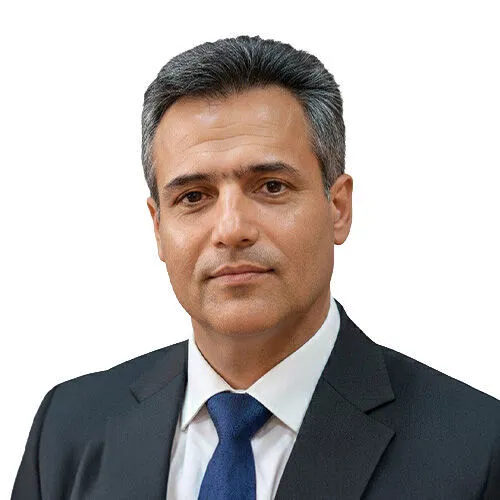
Mehdi Tanha Ziyarati
Head of Environment Department, Pars Special Economic Energy Zone
National Iranian Oil Company
Iran
Mehdi Tanha Ziyarati is the Head of the Environmental Department at the Pars Special Economic Energy Zone (PSEEZ). With strong expertise in environmental management and sustainable development, he leads initiatives to ensure compliance with national and international standards. His efforts focus on minimizing environmental impacts, promoting green practices, and supporting the energy sector’s sustainable growth in one of Iran’s most strategic industrial zones.
Participates in
TECHNICAL PROGRAMME | Energy Fuels and Molecules
Alternative Fuels - E fuels, Biofuels and SAF
Forum 15 | Hall 5 Digital Poster Plaza 3
29
April
11:30
13:30
UTC+3
Pars Special Economic Energy Zone (PSEEZ) as a megascale gas industries region located in Asaluyeh County, southwestern Iran, faces serious challenges in sustainable waste management. For many years, the waste generated in this zone, including urban, rural, and municipal waste from petrochemical and gas refining industries, has been primarily collected and disposed of in a rudimentary manner at an open dumping site near the city of Kangan. The present feasibility study was conducted with the aim of identifying and evaluating optimal options for establishing a modern waste management complex in PSEEZ to acheive resource and energy recovery, as well as reduce the environmental, health and social impacts of waste disposal.
Municipal waste in the special zone is mainly generated from three primary sources: urban and rural areas (approximately 33 tpd), PSEEZ organization (approximately 5 tpd), and the industrial sector (approximately 40 tpd). In addition, nearly 15 tonnes per day of green waste is also generated in the PSEEZ. Physical analysis of the generated waste indicated a significant composition of compostable organic matter (39%), combustible materials (41%), and recyclables (20%), demonstrating a high potential for resource recovery.
Considering population growth rates and per capita waste generation, the municipla waste generation in a 10-year horizon is predicted to be around 105 tonnes per day, and green waste around 25 tonnes per day. For the processing and disposal of this waste, six combined options involving material recovery facilities, composting, production of solid recovered fuel (SRF), and incineration in combination with landfilling were technically, economically, and environmentally evaluated. Comparison results showed that options 1 (dry recycling and landfilling) and 2 (dry recycling, composting, and landfilling) had the lowest costs but were excluded due to the need for land area exceeding 6 hectares (which is a limitation of the designated complex site). Among the remaining options, those based on SRF production (3 and 4) were superior to incineration-based options (5 and 6) in terms of water and energy consumption, complexity, and final cost, although the incineration-based options were more effective in landfill diversion. Given the significant cost difference (incineration options were 4 times more expensive) and operational complexity, SRF-based options were prioritized. Finally, option four, which includes a material recovery facility, biodrying of compostable and green waste, production of SRF from combustible and dried waste, and landfilling of remaining waste, was selected as the optimal option. This option had the highest diversion rate among SRF-based options, required less land, offered higher energy efficiency, and posed lower risk in the final product market compared to option 3. Successful implementation of this option requires resolving challenges such as securing long-term cooperation from the Kangan cement factory and ensuring the desired quality of the produced SRF.
Co-author/s:
Sakhavat Asadi, The CEO of the Pars Special Economic Energy Zone, National Iranian Oil Company.
Mahdi Jalili Ghazizade, Associate Professor, Department of Environmental Technologies, Environmental Sciences Research Institute (ESRI), Shahid Beheshti University.
Municipal waste in the special zone is mainly generated from three primary sources: urban and rural areas (approximately 33 tpd), PSEEZ organization (approximately 5 tpd), and the industrial sector (approximately 40 tpd). In addition, nearly 15 tonnes per day of green waste is also generated in the PSEEZ. Physical analysis of the generated waste indicated a significant composition of compostable organic matter (39%), combustible materials (41%), and recyclables (20%), demonstrating a high potential for resource recovery.
Considering population growth rates and per capita waste generation, the municipla waste generation in a 10-year horizon is predicted to be around 105 tonnes per day, and green waste around 25 tonnes per day. For the processing and disposal of this waste, six combined options involving material recovery facilities, composting, production of solid recovered fuel (SRF), and incineration in combination with landfilling were technically, economically, and environmentally evaluated. Comparison results showed that options 1 (dry recycling and landfilling) and 2 (dry recycling, composting, and landfilling) had the lowest costs but were excluded due to the need for land area exceeding 6 hectares (which is a limitation of the designated complex site). Among the remaining options, those based on SRF production (3 and 4) were superior to incineration-based options (5 and 6) in terms of water and energy consumption, complexity, and final cost, although the incineration-based options were more effective in landfill diversion. Given the significant cost difference (incineration options were 4 times more expensive) and operational complexity, SRF-based options were prioritized. Finally, option four, which includes a material recovery facility, biodrying of compostable and green waste, production of SRF from combustible and dried waste, and landfilling of remaining waste, was selected as the optimal option. This option had the highest diversion rate among SRF-based options, required less land, offered higher energy efficiency, and posed lower risk in the final product market compared to option 3. Successful implementation of this option requires resolving challenges such as securing long-term cooperation from the Kangan cement factory and ensuring the desired quality of the produced SRF.
Co-author/s:
Sakhavat Asadi, The CEO of the Pars Special Economic Energy Zone, National Iranian Oil Company.
Mahdi Jalili Ghazizade, Associate Professor, Department of Environmental Technologies, Environmental Sciences Research Institute (ESRI), Shahid Beheshti University.
TECHNICAL PROGRAMME | Energy Leadership
ESG and Governance
Forum 28 | Hall 5 Digital Poster Plaza 5
29
April
11:30
13:30
UTC+3
The Pars Special Economic Energy Zone (PSEEZ), as one of the world’s largest energy and petrochemical hubs, poses complex environmental and social governance challenges. This study investigates industrial noise exposure as a critical ESG (Environmental, Social, and Governance) parameter, assessing the effectiveness of current noise management regulations in protecting local communities. Sound levels were monitored across 60 locations during three-time intervals, and spatial analysis using ArcGIS enabled the development of detailed noise distribution maps. The results identified five primary noise sources: road traffic, flares, diesel generators, compressors, and industrial machinery. While noise levels near flares and compressors exceeded thresholds, their impact on residential zones remained limited. However, the desalination plant was identified as the dominant contributor to urban noise exposure.
Mitigation measures such as acoustic barriers and green buffers proved effective in maintaining compliance with existing standards. The study concludes that although PSEEZ hosts a high concentration of energy infrastructure, current environmental safeguards and governance frameworks are adequate, and immediate regulatory tightening may not be necessary. The findings underscore the importance of ongoing environmental monitoring, data-driven governance, and proactive stakeholder engagement to ensure sustainable industrial development and maintain the social license to operate.
Co-author/s:
Sakhavat Asadi, The CEO of the Pars Special Economic Energy Zone, National Iranian Oil Company.
Akram Hosseinnia, Consultant Research Institute of Petroleum Industry (RIPI), National Iranian Oil Company.
Mitigation measures such as acoustic barriers and green buffers proved effective in maintaining compliance with existing standards. The study concludes that although PSEEZ hosts a high concentration of energy infrastructure, current environmental safeguards and governance frameworks are adequate, and immediate regulatory tightening may not be necessary. The findings underscore the importance of ongoing environmental monitoring, data-driven governance, and proactive stakeholder engagement to ensure sustainable industrial development and maintain the social license to operate.
Co-author/s:
Sakhavat Asadi, The CEO of the Pars Special Economic Energy Zone, National Iranian Oil Company.
Akram Hosseinnia, Consultant Research Institute of Petroleum Industry (RIPI), National Iranian Oil Company.