


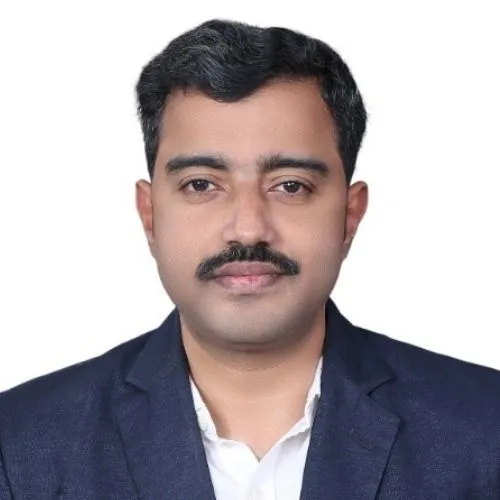
Ramanathan Arunachalam
Chief Manager - Technical
Hindustan Petroleum Corporation Limited
India
Started my carreer in Fluidized catalytic Cracking unit (FCCU) and carried out commissioning of FCCU-Revamp in Hindustan Petroleum Corporation Limited – Visakh refinery, India.
Subsequently, worked as Technical service expert on Energy Conservation, Decarbonization. Currently heading Technical Team for Crude Distillation Units, Fluidized Catalytic Cracking Units, Aviation Turbine Fuel, all light end units like LPG treating, hexane etc.
Participates in
TECHNICAL PROGRAMME | Energy Fuels and Molecules
Pathways to Net-Zero Refining and Petrochemical Facilities
Forum 16 | Hall 5 Digital Poster Plaza 3
30
April
10:00
12:00
UTC+3
Hindustan Petroleum Corporation Limited (HPCL) has successfully demonstrated the co-processing of Plastic Pyrolysis Oil (PPO) in its New Fluidized Catalytic Cracking Unit (NFCCU) at Mumbai Refinery, marking a major step towards establishing circular economy practices in the Indian downstream sector. This initiative, jointly driven by Mumbai Refinery and HP Green R&D Centre (HPGRDC), showcases the refinery’s ability to recycle waste plastic into valuable fuels, thereby reducing environmental impact and contributing to national sustainability goals.
The project began with detailed laboratory characterization of PPO, including physio-chemical analyses and micro-reactor studies. These experiments confirmed that co-processing PPO in the range of 0.5–5 wt% with conventional FCC feedstock is technically feasible, enhancing conversion, LPG yield, reducing resid and light cycle oil yields. Field implementation was enabled through a Management of Change (MOC) framework, involving skid modifications, safety reviews, and operational trials. One of the main challenges addressed was the higher chlorine (50 ppm) and diene content (2.8) in untreated PPO, which can lead to corrosion and coke formation. Treated PPO, however, demonstrated chlorine and diene levels comparable to FCC feed, ensuring smooth operations and long-term reliability.
Between 10–21 March 2025, HPCL processed 16 MT of PPO at 0.5–5 wt% blend ratios with NFCC feed. The processing was completed without adverse operational impact and confirmed stable yields. Importantly, this initiative resulted in a net reduction of approximately 154.6 tCO₂e emissions during the processing period, underscoring its environmental benefits. Furthermore, yield improvements were observed, with higher PPO content correlating with increased production, demonstrating both ecological and economic value.
The successful completion of this initiative also earned HPCL’s Mumbai Refinery an International Sustainability and Carbon Certification (ISCC PLUS), making it the first Indian public sector refinery to achieve such recognition for PPO processing. Beyond immediate results, the case establishes replicability across other FCC units, positioning HPCL as a leader in advancing plastic waste valorization in refinery operations.
This work highlights the innovation, scalability, and impact of PPO co-processing, proving that waste plastics can be transformed into high-value fuels while supporting global decarbonization and circularity objectives.
Co-author/s:
Kukude Somanath, Chief Manager, Hindustan Petroleum Corporation Limited.
The project began with detailed laboratory characterization of PPO, including physio-chemical analyses and micro-reactor studies. These experiments confirmed that co-processing PPO in the range of 0.5–5 wt% with conventional FCC feedstock is technically feasible, enhancing conversion, LPG yield, reducing resid and light cycle oil yields. Field implementation was enabled through a Management of Change (MOC) framework, involving skid modifications, safety reviews, and operational trials. One of the main challenges addressed was the higher chlorine (50 ppm) and diene content (2.8) in untreated PPO, which can lead to corrosion and coke formation. Treated PPO, however, demonstrated chlorine and diene levels comparable to FCC feed, ensuring smooth operations and long-term reliability.
Between 10–21 March 2025, HPCL processed 16 MT of PPO at 0.5–5 wt% blend ratios with NFCC feed. The processing was completed without adverse operational impact and confirmed stable yields. Importantly, this initiative resulted in a net reduction of approximately 154.6 tCO₂e emissions during the processing period, underscoring its environmental benefits. Furthermore, yield improvements were observed, with higher PPO content correlating with increased production, demonstrating both ecological and economic value.
The successful completion of this initiative also earned HPCL’s Mumbai Refinery an International Sustainability and Carbon Certification (ISCC PLUS), making it the first Indian public sector refinery to achieve such recognition for PPO processing. Beyond immediate results, the case establishes replicability across other FCC units, positioning HPCL as a leader in advancing plastic waste valorization in refinery operations.
This work highlights the innovation, scalability, and impact of PPO co-processing, proving that waste plastics can be transformed into high-value fuels while supporting global decarbonization and circularity objectives.
Co-author/s:
Kukude Somanath, Chief Manager, Hindustan Petroleum Corporation Limited.