


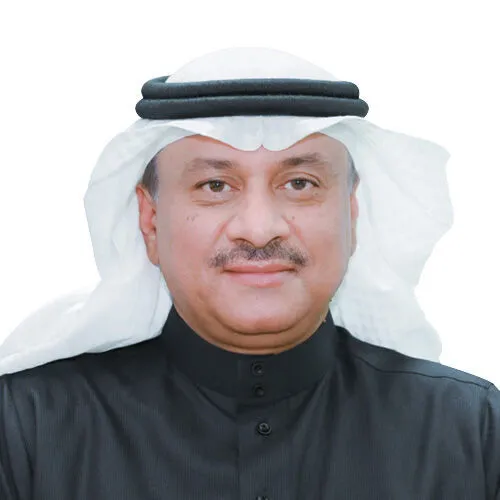
Sulaiman Al-Khattaf
VP, Technology & Innovation (T&I)
TASNEE
Saudi Arabia
Dr. Sulaiman Al-Khattaf is the Vice President, Petrochemicals Research, Technology & Innovation, TASNEE, Al-Jubail. Before joining TASNEE, he was a professor of chemical engineering and director of center for Refining & Petrochemical at King Fahd University of Petroleum & Minerals (KFUPM), Dhahran, Saudi Arabia.
Dr. Al-Khattaf served as a consultant to the Ministry of Petroleum & Mineral Resources, Riyadh during 2008-2013. Also, he was a visiting researcher to OPEC, Vienna, Austria 2006 and to Cambridge university 2013. He has been conducting research in conversion of crude oil to chemicals, refinery and petrochemicals for more than 30 years. He has published more than 140 research papers in ISI journals and is the inventor of more than 30 USPTO patents. He has received KAUST award for winning Center-in-Development in petrochemicals in 2008 and KFUPM distinction awards for excellence in research in 2007, 2010 and 2012. In 2019, he was awarded the first prize in the branch of scientific research of the Award of Presidents and Rectors of Universities and Higher Education Institutions in GCC Countries.
Participates in
TECHNICAL PROGRAMME | Energy Fuels and Molecules
The short-term phase of this pathway emphasizes efficiency improvements, energy optimization, and near-term fuel-switching measures. For example, the replacement of liquid fuel firing with natural gas (C2+ substitution) is projected to reduce carbon emissions by approximately 60,000 tCO₂ annually. Between 2022 and 2023, these efforts collectively contributed to a 4% reduction in CO₂ intensity across all operations. Mid- to long-term measures focus on adoption of emerging technologies such as hydrogen refueling, large-scale electrification, carbon capture, utilization, and storage (CCUS), and integration of renewable energy systems. TASNEE also maintains close engagement with licensors and technology providers to evaluate low-carbon catalysts and energy-efficient process technologies.
Complementing these decarbonization measures are renewable and green initiatives, including installation of solar power that offsets 24% of TASNEE’s R&D center electricity demand and a tree-planting program that has already added 2,000 trees, with planned expansion across company sites. Additionally, circular economy initiatives play a central role. TASNEE’s downstream operations produce over one million lightweight polypropylene pallets annually from mechanically recycled battery cases (13 KTA capacity) and manufacture car batteries through a closed-loop lead recycling process (67 KTA capacity). To further strengthen resource recovery, pilot-scale chemical recycling of polyolefins has been initiated, which will enable the conversion of used polymers into valuable monomers and chemicals.
Taken together, TASNEE’s decarbonization roadmap demonstrates how a phased, technology-driven, and circular approach can support both national and corporate climate goals. The combination of immediate efficiency gains, mid-term technology adoption, and long-term renewable and recycling strategies highlights a scalable framework for advancing industrial sustainability while reducing carbon intensity in line with Saudi Arabia’s 2060 net-zero target.