


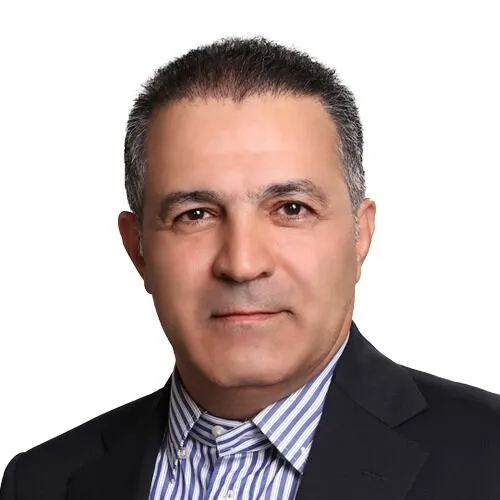
Farzad Bahadoran
Senior Researcher and Scientific Staff
Research Institute of Petroleum Industry (RIPI)
Iran
Dr. Farzad Bahadoran is a senior researcher and catalyst specialist at the Research Institute of Petroleum Industry (RIPI), with over a decade of experience in heterogeneous catalysis and gas processing technologies. His expertise encompasses catalyst development, and industrial technology transfer, with a focus on hydrogen production, gas-to-liquid (GTL) processes, and environmental catalysis.
Dr. Bahadoran has played a pivotal role in Iran’s strategic helium program. As the technical manager of the Helium Projects, he led the research and development of helium extraction and purification from Iran’s gas reservoirs.
In addition to his research contributions, Dr. Bahadoran is an active academic mentor and scholar. He supervises postgraduate students and regularly publishes in peer-reviewed journals in the fields of chemical engineering and catalysis. His interdisciplinary approach effectively bridges fundamental research with industrial application, aligning with national priorities in energy innovation and sustainability.
Participates in
TECHNICAL PROGRAMME | Energy Fuels and Molecules
TECHNICAL PROGRAMME | Energy Fuels and Molecules
This study presents the first detailed technical and economic assessment of helium recovery potential from various Iranian gas processing facilities. A total of nine gas samples were analyzed—including one associated gas and eight processed gas samples—using gas chromatography (GC). Helium concentrations ranged from 100 to 800 ppm, with two samples falling below the detection limit (100 ppm). As anticipated, the helium content in associated gas was minimal, due to the inherently low solubility of helium in crude oil.
Among currently available technologies, cryogenic separation emerges as the only economically feasible method for helium extraction at these concentrations. This approach becomes commercially viable when helium recovery is integrated with liquefied natural gas (LNG) production, following models implemented in countries like Qatar. For a standalone helium recovery unit to be cost-effective, a feed gas concentration of at least 2000 ppm is required.
The majority of the refinery outlet samples showed helium concentrations between 400 and 800 ppm. This variation is attributed to feedstock blending from multiple gas fields, which lowers the average helium concentration. The study also explored membrane separation technologies as an alternative; however, the presence of approximately 1% CO₂—introduced during amine gas treating with MDEA—poses technical challenges by reducing membrane selectivity and complicating system design.
A preliminary techno-economic analysis was conducted for both a mini-LNG plant and a medium-scale helium recovery unit, assuming an 80% helium recovery efficiency. The results indicate that, with proper integration and process optimization, a sustainable economic model for helium production in Iran is achievable.
A complementary project is currently underway to assess helium concentrations in raw gas streams prior to processing. This parallel effort aims to identify high-helium fields and further refine the economic feasibility of upstream helium recovery. Together, these studies lay the groundwork for strategic investment in Iran’s future role as a helium supplier in the global market.