

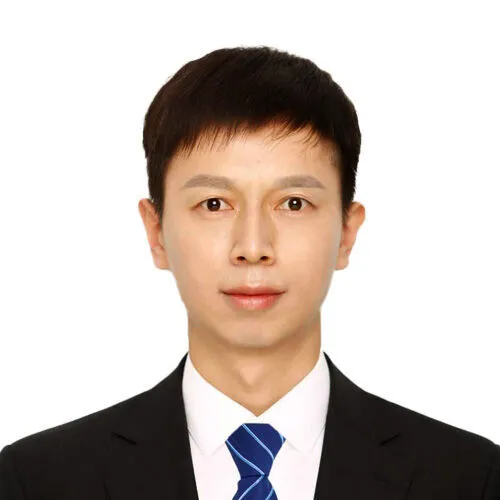
Zhanwei Yang
Engineer
Research Institute of Petroleum Exploration & Development, PetroChina
China
Zhanwei Yang, Senior Engineer with 13 yrs of experience, holds an M.S. in Oil & Gas Field Development Engineering. Specialized in ultra-deep reservoir stimulation and fracturing fluid tech, he has led key PetroChina projects on high-T/P H₂S reservoirs and CBM fracturing. Currently researching 10,000m deep carbonate reservoir tech, he excels in complex reservoir engineering.
Participates in
TECHNICAL PROGRAMME | Energy Technologies
Research, Technology Start-ups and Funding
Forum 19 | Hall 5 Digital Poster Plaza 4
28
April
10:00
12:00
UTC+3
The quality of ultra - deep, high - temperature and high - pressure oil - gas reservoirs in Tarim has declined. Over 85% of the wells require stimulation before achieving economic production. In some wells, the in - situ stress gradient exceeds 2.0 MPa/100m, natural fractures are poorly developed, and it is extremely challenging to initiate fractures. As a result, these wells fail to meet the economic production targets after stimulation. For ultra - deep reservoirs with natural fractures, by demonstrating the activation state of natural fractures during the reservoir stimulation process and their influence on increasing the fracture - controlled stimulated volume, the effect of increasing the bottom - hole net pressure on the tensile opening of natural fractures was analyzed. Technical measures such as temporary plugging in fractures, weighted fracturing fluids, slick water, and low - viscosity and high - efficiency proppant - carrying fracturing fluids, as well as other supporting process technologies for enhancing the fracture - controlled stimulated volume, were studied. This aims to fully stimulate the reservoirs at a relatively low puping flow rate and improve the stimulation effect. Secondly, for high - stress - gradient reservoirs with under - developed natural fractures, different - density and different - temperature - resistant series of weighted fracturing fluids were mainly developed. The weighted density ranges from 1.2 to 1.5g/cm³, and the maximum temperature resistance reaches 200°C. Low - cost calcium chloride were utilized as weighting materials, and thickening agents were optimally selected. Supporting cross - linking agents and gel - breaking agents, especially stress - corrosion inhibitors, were developed, which resolved the stress corrosion issue caused by high - concentration brine and significantly broadened the application scope of calcium chloride - weighted fracturing fluids. Field oil well tests indicated that the drag - reduction rate of the new - type weighted fracturing fluids was 45 - 58% (weighted to 1.35g/cm³, with a flow rate of 2 - 5m³/min), confirming the high drag - reduction effect of the weighted fracturing fluid system. The minimum flow rate in field application was 1.8m³/min, and 20m³ of proppant was added, providing a favorable liquid technology for the stimulation of high - stress tight reservoirs. More than 20 ultra - deep wells in Tarim have applied the new processes and new fluids formed through comprehensive laboratory research. The proppant - adding success rate was 100%, and no problems such as sand plugging occurred. The production increased by 2.8 - 3.5 times, achieving excellent stimulation results. The stimulation technology of ultra deep oil and gas reservoirs in Tarim has made significant progress, and some of the technologies have reference significance for the fracturing of ultra deep reservoirs in other regions around the world. We hope that colleagues can gain inspiration from this. Keywords: Ultra - deep reservoir; High - temperature and high - pressure; Natural fracture; Weighted fracturing; Stimulation process.