


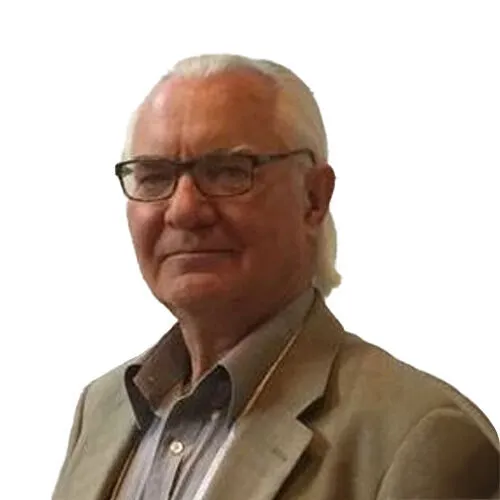
Alexandru Turta
CEO
A T EOR Consulting, Inc.
Canada
Alex has a Ph.D. in oil recovery by in situ combustion (ISC).
He has been involved in 18 pilots and 6 commercial ISC operations. Recently, he guided ISC piloting in Chichimene Field, Colombia, which is about to expand to commercial operation.
Alex is the co-inventor of the new ISC process, Toe-to-Heel Air Injection (THAI), for the production of upgraded oil and hydrogen from heavy oil reservoirs. So far, THAI has been applied in 7 fields in Canada, China and India.
Presently, Alex researches ISC process to maximize hydrogen production.
Participates in
TECHNICAL PROGRAMME | Energy Technologies
Research, Technology Start-ups and Funding
Forum 19 | Hall 5 Digital Poster Plaza 4
28
April
10:00
12:00
UTC+3
Recently, the production of in-situ upgraded oil and hydrogen in some heavy oil field pilots became a reality. This was achieved with the Toe-to-Heel Air Injection (THAI) process, which consists of a combination of in-situ combustion with horizontal wells. Also, field testing of nano-catalysts and nanofluids in heavy oil reservoirs has recorded the first positive results.
THAI is the first enhanced oil recovery process that upgrades heavy oil underground, while recovering it, without any external heat sources; its second feature is the hydrogen contained in the produced gases. With the special completion of the THAI horizontal producers, an add-on new process called CAPRI can achieve a secondary upgrading.
THAI has been technically validated by seven field pilots located in India, Canada and China. Kerrobert Pilot, in Canada, has been in operation for 16 years; oil upgrading of 3-4 0API and viscosity decrease from 54,000cp to 3,000 cp have been achieved. Canadian, Athabasca THAI pilot, showed hydrogen in the range of 2%-6%, but in some conditions it was up to 14%.
Unintentional in-situ upgrading was recorded in eight very old conventional in-situ combustion (ISC) field projects, with or without special modifications. Not being designed to produce hydrogen (H2), for most of them, the mechanisms are deciphered only today. The most important project was Marguerite Lake wet ISC pilot in Canada, which produced 2-3% H2 during air-sustained wet ISC and up to 10-21% during oxygen (O2) sustained wet ISC, applied by alternative injection of O2 and water (with 10% H2 during O2 injection and up to 21% during water injection). Recently, a simulation model for the generation and production of H2 was developed, and it was validated by history matching of Marguerite Lake project.
Intensive laboratory investigations have indicated a maximum of 36% H2 in the case of catalyst use and for a combination of ISC with steam injection, which showed the best perspectives.
Obtaining ISC-generated hydrogen directly in-situ has been under investigation for 7 years. Although there are two main challenges – development of H2-selective, robust membranes and forcing CO2 to remain underground - some small progress has been made.
Recently, using nano-catalysts, important field successes were recorded for heavy oil production via the oil viscosity decrease, leading to enhanced recovery up to 200% per cycle in cyclic steam stimulations. The most important results are presented and discussed. Therefore, nano-catalysts’ successful use for a short-distance action is almost proven, technically.
Typical results of oil upgrading and hydrogen production in heavy oil fields and laboratory investigations correlated with recent simulations of laboratory and field tests will be presented and discussed. This way, the future pathways in field testing and in main research directions will be indicated to accelerate the potential commercial application.
THAI is the first enhanced oil recovery process that upgrades heavy oil underground, while recovering it, without any external heat sources; its second feature is the hydrogen contained in the produced gases. With the special completion of the THAI horizontal producers, an add-on new process called CAPRI can achieve a secondary upgrading.
THAI has been technically validated by seven field pilots located in India, Canada and China. Kerrobert Pilot, in Canada, has been in operation for 16 years; oil upgrading of 3-4 0API and viscosity decrease from 54,000cp to 3,000 cp have been achieved. Canadian, Athabasca THAI pilot, showed hydrogen in the range of 2%-6%, but in some conditions it was up to 14%.
Unintentional in-situ upgrading was recorded in eight very old conventional in-situ combustion (ISC) field projects, with or without special modifications. Not being designed to produce hydrogen (H2), for most of them, the mechanisms are deciphered only today. The most important project was Marguerite Lake wet ISC pilot in Canada, which produced 2-3% H2 during air-sustained wet ISC and up to 10-21% during oxygen (O2) sustained wet ISC, applied by alternative injection of O2 and water (with 10% H2 during O2 injection and up to 21% during water injection). Recently, a simulation model for the generation and production of H2 was developed, and it was validated by history matching of Marguerite Lake project.
Intensive laboratory investigations have indicated a maximum of 36% H2 in the case of catalyst use and for a combination of ISC with steam injection, which showed the best perspectives.
Obtaining ISC-generated hydrogen directly in-situ has been under investigation for 7 years. Although there are two main challenges – development of H2-selective, robust membranes and forcing CO2 to remain underground - some small progress has been made.
Recently, using nano-catalysts, important field successes were recorded for heavy oil production via the oil viscosity decrease, leading to enhanced recovery up to 200% per cycle in cyclic steam stimulations. The most important results are presented and discussed. Therefore, nano-catalysts’ successful use for a short-distance action is almost proven, technically.
Typical results of oil upgrading and hydrogen production in heavy oil fields and laboratory investigations correlated with recent simulations of laboratory and field tests will be presented and discussed. This way, the future pathways in field testing and in main research directions will be indicated to accelerate the potential commercial application.