


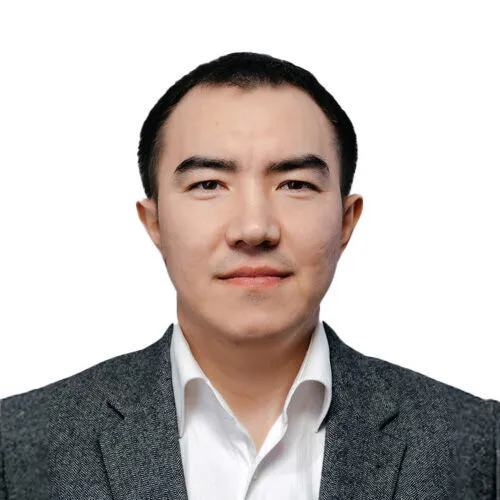
Kurmanbek Yeshmagambetov
Head of Standarts and Innovation Department
KazTransOil JSC
Kazakhstan
I am Dr. Kurmanbek Yeshmagambetov, a dedicated Kazakhstani engineer and project management specialist with over 17 years of hands-on experience in the oil and gas industry, focusing on pipeline construction, engineering innovation, and strategic leadership. Born on August 11, 1987, in Kazakhstan, I am proudly married with three wonderful children. My career has been a journey of continuous growth, driven by a passion for building resilient energy infrastructure that powers Kazakhstan's emergence as a key player in Central Asia's energy landscape.
My academic path has equipped me with a strong foundation in both theory and practice, spanning institutions across Kazakhstan and the United Kingdom. I earned my PhD in Project Management from Heriot-Watt University in Edinburgh from 2018 to 2023, where my research explored innovative strategies for managing complex engineering projects, emphasizing efficiency and sustainability. This built on my MSc in Project Management from the same university in 2013–2014.
My education in Kazakhstan laid the groundwork for my expertise. Between 2008 and 2010, I completed an Executive MBA in Oil and Gas at the Kazakh-British Technical University in Almaty" I began with a Bachelor's degree from the Kazakh National Technical University named after K.I. Satpayev in 2008, graduating as an Engineer (Pipeline Designer) with a focus on the design, construction, and operation of gas and oil pipelines and storage facilities. A highlight of my academic journey was receiving the prestigious Bolashak International Scholarship from the First President of Kazakhstan in 2018, which funded my advanced studies abroad and affirmed my commitment to elevating Kazakhstan's technical talent on the world stage.
I launched my professional career in September 2008 at JSC "KazStroyService" in the Pipeline Construction Directorate, starting as a Design Engineer. Over the next two years, I advanced to Engineer for Design and Executive Documentation in the Project Management Group, where I honed my skills in preparing engineering documents and executing vital infrastructure projects. In March 2010, I joined JSC "KazTransOil," Kazakhstan's flagship oil transportation company, embarking on a transformative decade that shaped my technical acumen.
At KazTransOil, my roles progressed swiftly, reflecting my growing impact. From February 2014 to December 2015, as an Engineer for Technical Supervision in the Aktyubinsk Pipeline Management's Capital Construction and Repair Service, I ensured rigorous compliance and quality control during pipeline repairs and upgrades. In December 2015, I was promoted to Leading Construction Engineer in the Western Branch's Project Assessment and R&D Service, where I evaluated and advanced major initiatives until March 2018. Back at the Central Office, I served as Manager of the Project Assessment Sector in the Engineering Department from March 2018 to January 2019, then as Manager of the PIR Management Department from January 2019 to April 2022. In April 2022, I took on the role of Engineer in the Engineering Department under the Project Management Division, wrapping up my engineering contributions there in November 2022.
Seeking new challenges, I transitioned in February 2024 to JSC "Aktyubinsk Plant of Metal Structures" (AZMK), a vital supplier of metal components for energy projects. I started as Technical Director, quickly rising to Deputy General Director in March 2024 and First Deputy General Director (Deputy for Production) in May 2024. In these positions, until May 2025, I streamlined production operations, implemented technological enhancements, and boosted manufacturing efficiency, strengthening AZMK's role in supporting Kazakhstan's industrial ecosystem.
Since May 2025, I have returned to KazTransOil as Head of the Standards and Innovation Department at the Research and Development Center Branch—a role I hold today, as of December 2025. In this capacity, I lead efforts to embed state-of-the-art technologies, stringent regulatory standards, and sustainable methodologies into oil transportation operations. My initiatives promote digital tools for pipeline monitoring and eco-conscious construction, aligning national projects with international excellence and aiding Kazakhstan's shift toward a greener energy future.
Throughout my career, I have contributed technical reports, mentored young engineers, and engaged in global forums to champion robust infrastructure in dynamic markets. The Bolashak scholarship not only expanded my horizons but also inspired me to connect Kazakh expertise with worldwide networks. Now based in Astana, I balance my work with family, drawing from my heritage to guide the next generation. Looking ahead, I am committed to driving innovation and integrity, helping forge a prosperous energy tomorrow for Kazakhstan.
Participates in
TECHNICAL PROGRAMME | Energy Technologies
Through a mixed-methods approach—including case studies, semi-structured interviews, and document analysis—the research identifies systemic inefficiencies in current waste management systems. For instance, BRICS nations exhibit alarmingly low recycling rates (e.g., 1–8% for construction waste), with most materials ending up in landfills or illegally dumped. Challenges such as inadequate regulatory frameworks, outdated technologies, and fragmented stakeholder collaboration hinder progress toward circularity. The paper proposes a Circular Economy Process Model (CEPM) tailored to oil and gas construction, emphasizing lifecycle integration, stakeholder engagement, and adaptive policies. Key strategies include adopting modular design, promoting recycled materials in infrastructure, incentivizing waste-to-energy technologies, and strengthening institutional frameworks for waste valorization.
Theoretical contributions highlight the integration of systems theory, life cycle assessment (LCA), and industrial ecology to reframe construction practices. Practically, the study offers actionable insights for policymakers and industry stakeholders, such as implementing circular procurement policies, advancing digital tools for waste tracking, and fostering cross-sector partnerships. Future applications of the CEPM could extend to other resource-intensive industries, supporting global sustainability goals.
By bridging the gap between developed and emerging economies, this research underscores the urgency of transitioning to circular practices in oil and gas construction. It provides a roadmap for reducing environmental footprints, optimizing resource use, and aligning the sector with international sustainability targets, such as the UN Sustainable Development Goals (SDGs). Ultimately, the study advocates for systemic innovation, policy coherence, and stakeholder-driven governance to achieve a resilient, low-carbon, and circular construction ecosystem in emerging markets.
Keywords: Circular economy; Construction waste management; Oil and gas projects; Sustainability; BRICS nations; Lifecycle assessment; Policy innovation.