


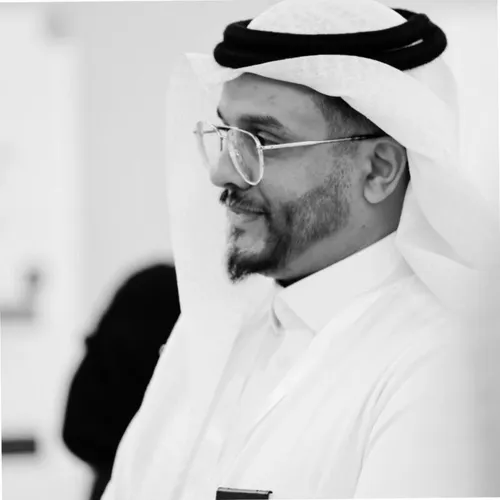
Mohammed Alnemari

Assistant Professor

University of Tabuk

Dr. Mohammed Hassan Alnemari is an Assistant Professor of Computer Engineering and Chair of the Computer Engineering Department at the University of Tabuk, Saudi Arabia. He holds a Ph.D. in Computer Engineering with specialization in TinyML, neural network compression, and efficient deep learning systems. Over the past years, he has worked across the USA, Japan, and Taiwan, contributing to research and development in machine learning, embedded systems, and advanced AI architectures. His work bridges the gap between theoretical models and real-world deployment, particularly in low-power and edge computing environments.


His research spans multiple applied domains, including biomedical signal analysis, energy-efficient smart infrastructure, and underwater/aerial biologically inspired robotics. He is currently leading projects on anomalous sound detection for industrial systems, EEG-based neural interfaces, and neural-operator-driven optimization for sustainable power systems. In addition, he is developing methodologies for neural network pruning, quantization, and tensor decomposition aimed at pushing inference efficiency on microcontrollers and edge devices.


Dr. Alnemari is passionate about expanding the Saudi research ecosystem by integrating engineering fundamentals with modern AI, and by empowering young engineers to build technology rather than only consume it. He actively publishes, mentors students, and collaborates with international research groups, with a vision of positioning Saudi Arabia as a global contributor to energy-efficient AI and cognitive-city technologies.


He is currently pursuing several research initiatives, a series of academic publications, and industry-grade implementations of TinyML and neural operator systems, with emphasis on real-world scalability, sustainability, and long-term societal impact.

Participates in

TECHNICAL PROGRAMME | Energy Infrastructure

Pipelines, Storage and SPRs
Forum 08 | Technical Programme Hall 2
28
April
10:00 11:30
UTC+3
Leak detection in oil and gas pipelines remains a critical challenge for operators such as Saudi Aramco, where undetected leaks can escalate into severe safety, environmental, and economic consequences. Conventional methods—including Computational Pipeline Monitoring (CPM), Real-Time Transient Modeling (RTTM), and Negative Pressure Wave (NPW) detection—are widely deployed but suffer from false alarms, sensitivity to operational transients, and limited adaptability. The novelty of this work lies in proposing a unified reflective middleware that fuses CPM, RTTM, and NPW within a single MAPE-K (Monitor–Analyze–Plan–Execute–Knowledge) loop, augmented by lightweight AI modules. Unlike prior studies that treat each method in isolation, the middleware integrates all three into a composite residual test, enhanced by AI-based adaptive thresholding, bias correction of RTTM predictions, and a priority-aware risk index that accounts for critical infrastructure and urban safety zones. This hybrid Physics + AI design preserves the transparency and regulatory trust of physics-based models while introducing adaptability and risk-awareness absent in current systems. The architecture also goes beyond anomaly detection by including an execution layer that issues automated valve closures, compressor throttling, and publish/subscribe alerts via MQTT. Compliance with API RP 1130, API RP 1175, and relevant Saudi Aramco Engineering Standards (SAES) is explicitly addressed, ensuring operational relevance. Simulation studies on representative crude oil and natural gas pipelines demonstrate significantly improved Probability of Detection (POD), reduced False Alarm Rate (FAR), and shorter Mean Time to Detect (MTTD) compared to CPM- or RTTM-only baselines. This integration of physics-based rigor, AI adaptability, and standards compliance defines a new class of reflective middleware for pipeline integrity management, designed specifically for the scale and operational requirements of Aramco’s oil and gas network.