


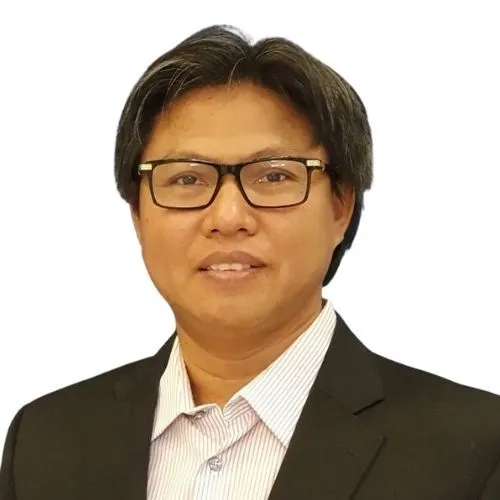
Yudi Siswadi

Lead of Process Engineering - South LNG

QatarEnergy LNG

Yudi Siswadi as lead of Process Engineering South-LNG in QatarEngery LNG, having 26 years’ experience in LNG plant in Indonesia and Qatar, holds a Bachelor’s degree in Chemical Engineering from Gadjah Mada University and Master’s degree of Business Administration from SBM ITB Indonesia. Over the years, worked in LNG, Helium recovery  and Utilities process as senior surveillance engineer, specialist, lead of asset engineering and lead of process engineering. Leading the complex and multi discipline troubleshooting, incident investigation, process optimization and plant performance test in both LNG and Utilities facilities.

Participates in

TECHNICAL PROGRAMME | Energy Fuels and Molecules

Helium, Lithium, and Trace Metals Extraction
Forum 17 | Digital Poster Plaza 3
30
April
12:00 14:00
UTC+3
QatarEnergy LNG facilities commissioned in 1996 without Helium Recovery Unit (HeRU). The first HeRU, commissioned in 2005, was designed to produce 700 MMSCF/year of Helium (He), with crude He feed sourced from eight LNG trains. However, early operations were constrained by insufficient feed, frequent freezing in the upgrader, and liquefaction capacity limitations. A milestone test in 2008 met throughput and purity requirements, production was exceeding the base design by 7%. However, the demonstration was just 24 hours long, failing short of the required 72-hours contractor performance guarantee. During the first six years of operation, HeRU-1 struggled to achieve consistent performance. Production remained limited to approximately 75% due to major concerns such as loading constraints, frequent turbine trip, PSA valve mismatch, limited liquefaction capacity and inefficiencies in the vapor recovery system. In 2011, an enhancement project was initiated, enabling the unit to momentarily reach design capacity. Nevertheless, sustainability remained difficult due to helium loading recovery limitation. Subsequence continuous improvement efforts addressed these challenges more effectively. Key initiatives included: i) Optimizing the helium container loading procedure ii) Trouble shooting and stabilizing PSA valve operation iii) Improving He recovery by control logic modification to Expanders-1/2, Cold Adsorbers and storage tanks connection iv) Extending the liquefier adsorber cycle times from 35 to 190 hrs v) Maximizing crude He feed, especially during winter peak production. As a result, HeRU-1 has now achieved sustained operation at the design capacity, and even reached above 4% during peak winter LNG production. This hard-won improvement shared as lesson learned for the second HeRU-2 design, which was successfully started up in 2014 and achieving guaranteed performance. This paper presents the technical journey, operational learning, and process innovations that enabled sustained helium recovery over two decades, providing a valuable reference for future helium plant design and operations.