

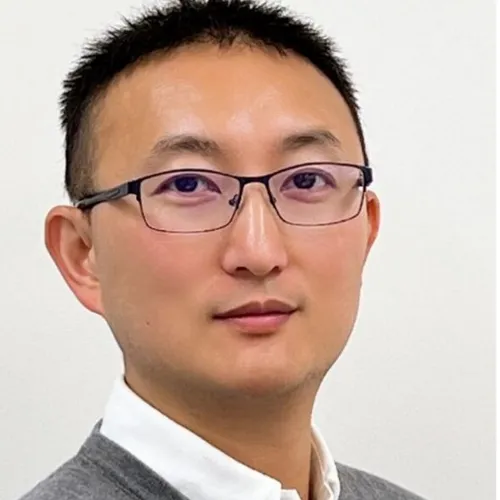
Wei Wang
Director
ROTOBOOST Finland Oy
Finland
Wei Wang is a Director at ROTOBOOST, a Finland-based hard-tech company commercializing Thermo-Catalytic Decomposition (TCD) of natural gas and biogas to produce low-emission hydrogen-rich gas and high-value solid carbon products. He leads global carbon business development, strategic partnerships, and investor relations, working at the intersection of industrial decarbonization, advanced carbon materials, and scalable hydrogen supply.
Wei’s work focuses on turning “difficult-to-abate” sectors into early adopters by integrating new technology into existing infrastructure and procurement realities—for example, he is leading ROTOBOOST’s China Baosteel–Business Finland National Key Project to deploy TCD into green steelmaking pathways, aligning technical deployment with industrial operating conditions, compliance requirements, and large-enterprise decision processes.
He has been deeply involved in deploying and scaling projects across maritime, steel, aluminum, and energy systems, collaborating with major industrial players and their engineering, compliance, and procurement teams. He also supports the commercialization of downstream carbon applications—such as conductive additives, battery and electrode materials, and other performance carbon products—alongside the core hydrogen value proposition.
Participates in
TECHNICAL PROGRAMME | Energy Fuels and Molecules
Hydrogen is a critical utility in refining, enabling hydrocracking, hydrotreating, and desulfurization processes. Today, most refinery hydrogen is produced via steam methane reforming (SMR), which emits large volumes of CO₂. TCD replaces SMR by splitting methane into low-carbon “turquoise” hydrogen and solid carbon, without generating CO₂ in the reaction stage. This eliminates the need for downstream CO₂ capture and storage, while producing a valuable solid carbon co-product—graphite or graphene—that can displace carbon-intensive materials in steelmaking, battery production, and construction, delivering additional Scope 3 emission reductions.
Integration of TCD into refinery hydrogen networks can be achieved with minimal disruption to existing process configurations. Modular TCD units can be deployed at hydrogen production hubs, processing natural gas or refinery off-gases. Lifecycle assessments (LCA), independently verified to ISO 14067:2018 standards, indicate that TCD hydrogen can achieve carbon intensities as low as 18 g CO₂/MJ—up to 76% lower than conventional SMR hydrogen—when supplied with low-methane-intensity feed gas.
Beyond hydrogen decarbonization, TCD can contribute to broader refinery emission reduction strategies. By processing light hydrocarbons from refinery fuel gas streams, TCD reduces flaring and methane slip, while supplying hydrogen for internal use or export to adjacent industrial clusters. The solid carbon by-product can be monetized, improving project economics and offsetting the absence of CO₂ storage revenues.
In the context of net-zero refining, TCD complements other measures such as renewable electricity integration, bio-based feedstocks, and circular carbon approaches. Unlike CCS, which is most effective at large, concentrated emission points, TCD addresses emissions at the source of hydrogen production, avoiding the energy penalty of CO₂ capture. Its modularity enables phased deployment aligned with tightening regulatory frameworks, including the EU Emissions Trading System and national decarbonization mandates.
By embedding TCD into refinery hydrogen systems, operators can achieve deep Scope 1 and Scope 3 emission reductions, enhance energy efficiency, and create new revenue streams from solid carbon products. This positions TCD as a pivotal technology in the transition towards net-zero refining—bridging current fossil-based operations with a low-carbon, circular industrial future.