


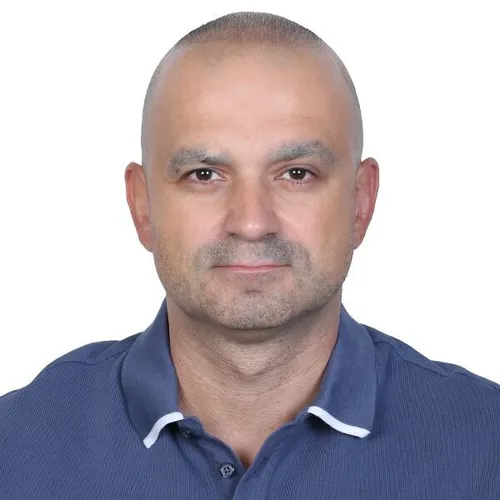
Arben Ferati
Participates in
TECHNICAL PROGRAMME | Energy Technologies
Advancing the Circular Economy & Value of Life Cycle Analyses
Forum 22 | Technical Programme Hall 4
29
April
10:00
11:30
UTC+3
QatarEnergy LNG produces 77 million tonnes per annum (MTPA) of Liquefied Natural Gas (LNG) and approximately 14 MTPA of sales gas. In addition, two condensate refineries produce approximately 307,000 barrels per stream day of products. Other associated facilities include two helium refineries, the world’s largest sulfur granulation facility and storage and loading facilities for LNG and other liquid hydrocarbon products in Ras Laffan Industrial City in Qatar. QatarEnergy LNG is currently undergoing a massive expansion taking its LNG production to 142 MTPA and scaling up supporting infrastructure. QatarEnergy LNG takes seriously its corporate responsibility to manage waste in line with the Qatar National Vision (QNV) 2030 and best industry practices. QatarEnergy LNG’s waste management approach, including the incorporation of circular economy principles, has led to the Company achieving its best-ever recycling rates in the range of 55% of total waste generated, as well as significant cost savings and revenue generation. This approach is based on the effective integration of both waste management systems and infrastructure and has led to the development and implementation of new processes and procedures, along with efficient use of existing waste facilities. QatarEnergy LNG has also introduced the concept of circular economy to its waste operations by developing innovative recycling and reuse solutions for its major waste streams based on partnerships and collaboration with local Small and Medium-sized Enterprises (SMEs), which in turn help support the growth of waste management infrastructure and expertise within the country. In practice, the circular economy approach has allowed QatarEnergy LNG to prioritise and implement sustainable solutions to a variety of materials that would otherwise be landfilled, ending their useful life cycles, with no economic or environmental benefit to the community. These recycling initiatives currently include molecular sieve recycling for local cement production, waste sulfur reuse for sulfuric acid production, enhanced recycling of lube oil and waste hydrocarbons and others. This paper will outline QatarEnergy LNG integrated approach to waste management, including the application of circular economy principles to develop sustainable waste recycling and reuse opportunities and cross-industry synergies. It will also provide an overview of QatarEnergy LNG forward vision to achieve sustained and pace-setting recycling rates of greater than 70% by 2030 as part of its long-term environmental strategy while contributing to overall circular economy within the State of Qatar. Keywords: circular economy, waste management, enhanced recycling, resources management, waste to worth.
Co-author/s:
Hilal Saad Al-Mohannadi, Environmental Affairs and Regulatory Manager, QatarEnergy LNG
Co-author/s:
Hilal Saad Al-Mohannadi, Environmental Affairs and Regulatory Manager, QatarEnergy LNG