

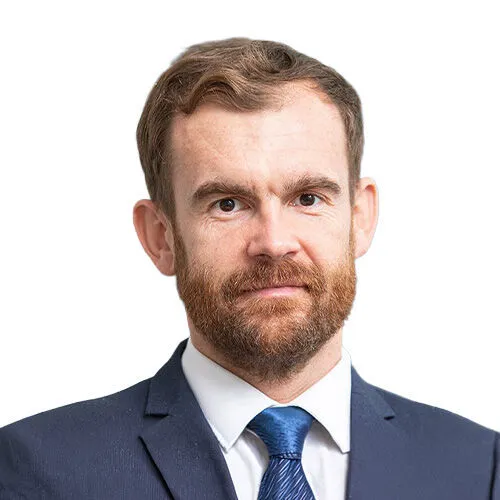
Maroš Čunta
Director of Crude Oil & Gas Purchase
Orlen Unipetrol a.s.
Slovakia
Maroš Čunta is a manager with 15+ years of experience in energy commodity supply and trading. Since 2016, he has been serving in ORLEN Unipetrol as a Crude Oil & Gas Director, managing strategic supplies for the group. He is also a Member of Czech National Committee of WPC Energy. From 2010 to 2014, he was working for Statoil ASA, being in charge of natural gas pricing and transportation .
He is a graduate of the Faculty of Business Economics at the Bratislava University of Economics and Business , and obtained the ERP® charter (GARP Institute).
Participates in
TECHNICAL PROGRAMME | Energy Leadership
Human Capital - Attracting, Training and Retaining
Forum 30 | Hall 10 - Technical Programme 5
29
April
14:30
16:00
UTC+3
In today’s increasingly competitive job market, the oil, gas, and energy sector faces a critical challenge—how to attract, develop, and retain top talent. As other industries continue to advance their human resource strategies, our sector must also evolve and become a compelling career choice for the new generation of professionals. The aim of this forum is to share proven and emerging approaches that can help our industry position itself as an attractive and future-focused employer.
A key factor in this transformation is the investment in modern training facilities and comprehensive talent development systems. The ORLEN Unipetrol Training Center stands as a strong example of this strategy. It offers realistic simulations of operational units, distillation columns, steam systems, fire safety polygons, and analytical laboratories. Through close collaboration with schools and universities, summer jobs, internships, and mentoring, the company creates a direct recruitment pipeline from elementary education to university graduates.
A significant milestone in strengthening this educational link is our strategic partnership with the University of Chemistry and Technology (VŠCHT Prague). In 2014, this collaboration led to the opening of the VŠCHT University Center directly within our chemical production site—making it the only facility of its kind in the Czech Republic. This center bridges theoretical knowledge with practical experience, providing students and researchers with direct access to modern infrastructure and real-world industry expertise.
This integrated approach not only strengthens technical skills but also encourages long-term engagement by proving that our sector values education, professional growth, and job stability. Simulation-based crisis training and safety modules prepare future operators to handle real operational challenges with confidence.
This paper will explore the key tools and methods necessary to sustain this momentum: targeted recruitment strategies, experiential learning models, digital training platforms, and cross-sector partnerships. It is essential to demonstrate that we value our workforce and are willing to invest in their future.
To stay competitive in the race for talent, we must redefine our industry—from one that is traditionally conservative to one that is driven by innovation, safety, sustainability, and personal development. Only by doing so can we ensure the continuous growth of the next generation of professionals.
A key factor in this transformation is the investment in modern training facilities and comprehensive talent development systems. The ORLEN Unipetrol Training Center stands as a strong example of this strategy. It offers realistic simulations of operational units, distillation columns, steam systems, fire safety polygons, and analytical laboratories. Through close collaboration with schools and universities, summer jobs, internships, and mentoring, the company creates a direct recruitment pipeline from elementary education to university graduates.
A significant milestone in strengthening this educational link is our strategic partnership with the University of Chemistry and Technology (VŠCHT Prague). In 2014, this collaboration led to the opening of the VŠCHT University Center directly within our chemical production site—making it the only facility of its kind in the Czech Republic. This center bridges theoretical knowledge with practical experience, providing students and researchers with direct access to modern infrastructure and real-world industry expertise.
This integrated approach not only strengthens technical skills but also encourages long-term engagement by proving that our sector values education, professional growth, and job stability. Simulation-based crisis training and safety modules prepare future operators to handle real operational challenges with confidence.
This paper will explore the key tools and methods necessary to sustain this momentum: targeted recruitment strategies, experiential learning models, digital training platforms, and cross-sector partnerships. It is essential to demonstrate that we value our workforce and are willing to invest in their future.
To stay competitive in the race for talent, we must redefine our industry—from one that is traditionally conservative to one that is driven by innovation, safety, sustainability, and personal development. Only by doing so can we ensure the continuous growth of the next generation of professionals.