


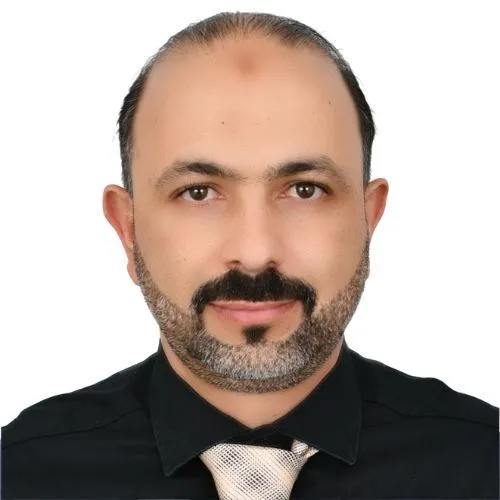
Shihab ALkattab
Operations Support Manager
TAQA
United Arab Emirates
Dr. Shihab Alkattab holds a Doctorate in Business Administration alongside a Master’s and Bachelor’s degree in Engineering. With a career rooted in the oil and gas industry, he combines technical expertise with strategic business acumen to address sustainability and environmental challenges in the energy sector. His doctoral research focused on integrating sustainable practices into oil and gas operations, underscoring his commitment to balancing energy development with environmental responsibility.
Participates in
TECHNICAL PROGRAMME | Energy Leadership
Energy Access for All
Forum 25 | Hall 10 - Technical Programme 5
27
April
13:30
15:00
UTC+3
Objectives/Scope: This research uses the Innovation Diffusion Theory to examine the impact of complexity on sustainability adoption among oil and gas service providers in the United Arab Emirates (UAE). It identifies seven key challenges, including supply chain, infrastructure, lack of experience, establishment and operating costs, lack of support, and lack of investment, and examines whether the size of the company significantly influences sustainability adoption.
Methods, Procedures, Process: Seven hypotheses were developed to gather insightful data on potential complexity factors. A quantitative mono-method approach was employed to assess the extent to which these challenges affect the implementation of sustainability practices. An online survey was distributed to employees at various levels within oil and gas service providers companies, including managerial, technical, logistics, safety, and other roles, to gather their feedback. The data was analyzed using both descriptive and inferential linear regression analysis. On the other side, the impact of the company size was analyzed using One-Way ANOVA and Tukey Honest Significant Difference (HSD).
Results, Observations, Conclusions: Overall, the findings supported all seven hypotheses proposed in the study. Approximately 84 % of respondents indicated that the identified complexity factors—Supply Chain (CMX1), Infrastructure (CMX2), Lack of Experience (CMX3), Establishment Cost (CMX4), Operating Cost (CMX5), Lack of Support (CMX6), and Lack of Investment (CMX7)—negatively influenced their companies' decisions to implement sustainability practices. Among these factors, Infrastructure, Lack of Investment, and Establishment Cost were identified as the most significant barriers, each contributing to 53 percent of the impact. Although Lack of Support and Supply Chain (SC) were found to have the least effect among the factors, their impact still reached 50 percent. The study also assessed whether company size—categorized as micro (=500 employees)—was a game changer in this context. Medium to large companies emerged as the most significant group in this analysis, as determined by One-Way ANOVA and Tukey HSD analysis.
Novel/Additive Information: Significant barriers to the adoption of sustainability by oil and gas service providers in the UAE are highlighted by this study. In order to address these issues, governments and private sector must work together to advance sustainable practices in the vital oil and gas industry sector.
Methods, Procedures, Process: Seven hypotheses were developed to gather insightful data on potential complexity factors. A quantitative mono-method approach was employed to assess the extent to which these challenges affect the implementation of sustainability practices. An online survey was distributed to employees at various levels within oil and gas service providers companies, including managerial, technical, logistics, safety, and other roles, to gather their feedback. The data was analyzed using both descriptive and inferential linear regression analysis. On the other side, the impact of the company size was analyzed using One-Way ANOVA and Tukey Honest Significant Difference (HSD).
Results, Observations, Conclusions: Overall, the findings supported all seven hypotheses proposed in the study. Approximately 84 % of respondents indicated that the identified complexity factors—Supply Chain (CMX1), Infrastructure (CMX2), Lack of Experience (CMX3), Establishment Cost (CMX4), Operating Cost (CMX5), Lack of Support (CMX6), and Lack of Investment (CMX7)—negatively influenced their companies' decisions to implement sustainability practices. Among these factors, Infrastructure, Lack of Investment, and Establishment Cost were identified as the most significant barriers, each contributing to 53 percent of the impact. Although Lack of Support and Supply Chain (SC) were found to have the least effect among the factors, their impact still reached 50 percent. The study also assessed whether company size—categorized as micro (=500 employees)—was a game changer in this context. Medium to large companies emerged as the most significant group in this analysis, as determined by One-Way ANOVA and Tukey HSD analysis.
Novel/Additive Information: Significant barriers to the adoption of sustainability by oil and gas service providers in the UAE are highlighted by this study. In order to address these issues, governments and private sector must work together to advance sustainable practices in the vital oil and gas industry sector.