

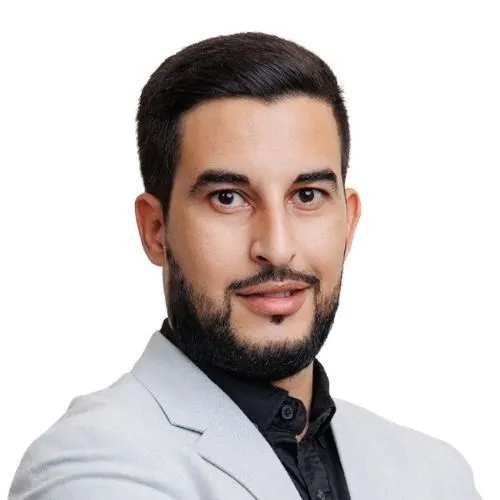
Jehad Abogsysa
PhD Student
National Research University Higher School of Economics
Russia
Jehad is a PhD candidate in Energy Economics with an MSc in Oil and Gas Management and a BSc in Petroleum Engineering. He is currently Director of International Development at a transportation and logistics firm, where he has progressed from Commercial Manager to a C-level role over eight years. His research explores the role of knowledge in resource-based economies. Combining engineering, management, and economics, he offers an integrated view of energy transition and industrial adaptation.
Participates in
TECHNICAL PROGRAMME | Energy Infrastructure
Navigating the Future: Innovations & Market Dynamics in LNG, FLNG, & CNG
Forum 07 | Hall 5 Digital Poster Plaza 2
12
October
15:30
17:30
UTC+3
Globalization made it possible to have a successful growth of the Russian liquefied natural gas (LNG) industry. The large-scale LNG projects gained access to the most important equipment, financing, and export routes through external markets, making the Russian gas sector part of global value chains. Nevertheless, deglobalization acceleration over the last few years (involving Western sanctions) has broken these established economic ties.. This change is manifested in the Russian context in terms of project structures shifting towards the reorientation of global partnerships to the “country region” structures. The outcome is a strategical shift domestically towards resilience against logistic divisions, limited access to technology, and export difficulties.
One of the implications is the increased market share of LNG companies in the country. As an example, the share of NOVATEK in the Russian gas market has grown to 18% in 2024 from 12% in 2020. The company responds to it by investing in the monetization of internal gases, especially along the following three axes: mobilizing domestic LNG consumption, full-scale chains of value in Russia, and product diversification. To increase consumption within the region, NOVATEK has placed four small LNG distribution centers two of which were opened following the start of sanctions. The company is also collaborating with local authorities in establishing refueling stations and subsidizing commercial LNG fleets. By 2024, 15 LNG filling stations had been built in the European region of Russia, and the number of such filling stations will reach 36 by 2026.
The efforts of product diversification incorporate raising the domestic liquefied hydrocarbons production (oil and gas condensate). The company is also increasingly substituting overseas suppliers with local firms in the form of processing modules and services, yet there are still loopholes in technology localization. The changes illustrate how the LNG industry is reorganising in Russia under duress due to the need to guarantee energy security and continuity of supply as well as sovereignty over infrastructure.
The results of this work are driven by analysis of the annual reports of the top Russian gas companies, as well as the original research of the author regarding the tendencies of development of the domestic market of gas over 2020-2024.
One of the implications is the increased market share of LNG companies in the country. As an example, the share of NOVATEK in the Russian gas market has grown to 18% in 2024 from 12% in 2020. The company responds to it by investing in the monetization of internal gases, especially along the following three axes: mobilizing domestic LNG consumption, full-scale chains of value in Russia, and product diversification. To increase consumption within the region, NOVATEK has placed four small LNG distribution centers two of which were opened following the start of sanctions. The company is also collaborating with local authorities in establishing refueling stations and subsidizing commercial LNG fleets. By 2024, 15 LNG filling stations had been built in the European region of Russia, and the number of such filling stations will reach 36 by 2026.
The efforts of product diversification incorporate raising the domestic liquefied hydrocarbons production (oil and gas condensate). The company is also increasingly substituting overseas suppliers with local firms in the form of processing modules and services, yet there are still loopholes in technology localization. The changes illustrate how the LNG industry is reorganising in Russia under duress due to the need to guarantee energy security and continuity of supply as well as sovereignty over infrastructure.
The results of this work are driven by analysis of the annual reports of the top Russian gas companies, as well as the original research of the author regarding the tendencies of development of the domestic market of gas over 2020-2024.