

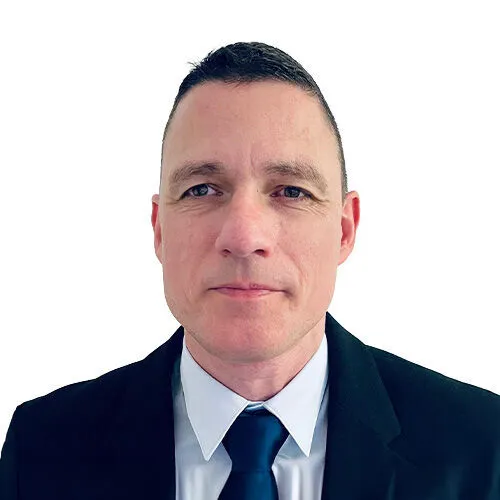
Filip Stancl
Subject Matter Expert
MOL
Slovakia
Mr. Filip Stancl has been working in the crude oil refining industry for 25 years. His recent position is subject matter expert at MOL, downstream group technology integration, in Budapest, Hungary. He studied crude oil processing at Slovak University of Technology, in Bratislava, Slovakia. In his career, he spent 17 years in production, technology and development positions in SLOVNAFT refinery and 8 years in MOL headquarter leading various projects for MOL group refineries and petrochemical sites.
Participates in
TECHNICAL PROGRAMME | Energy Fuels and Molecules
Alternative Fuels - E fuels, Biofuels and SAF
Forum 15 | Hall 9 - Technical Programme 3
28
April
14:30
16:00
UTC+3
In the mission to address climate change and secure a sustainable future, biofuels emerge as a source of optimism. By significantly reducing greenhouse gas emissions, biofuels not only enhance air quality but also mitigate environmental degradation. They offer a pathway to energy independence, diminishing our reliance on depleting fossil fuel reserves. Embracing biofuels is more than an environmental choice; it's a stride towards economic resilience and sustainable development. Recently, the spotlight has turned to hydrocracking units in biofuel production, unveiling promising avenues for creating Hydrotreated Vegetable Oil (HVO) and Sustainable Aviation Fuel (SAF). These advancements underscore the transformative potential of biofuels in our journey towards a cleaner planet, reducing CO2 emissions from fossil feedstocks.
The hydrocracker unit, initially commissioned in 1991 and revamped in 2009 to optimize middle distillate production, mirrors evolving fuel market trends. This study explores the coprocessing of Used Cooking Oil (UCO), not containing palm oil, within a single-stage, once-through Vacuum Gas Oil (VGO) hydrocracker loaded with a catalyst system providing good cold flow properties for diesel and kerosene at 95% overall conversion. It encapsulates the practical experiences of a Central European refiner from commercial-scale coprocessing trials, highlighting the advantages and challenges, including yields, properties, and operational bottlenecks.
The research investigates the balance between Sustainable Aviation Fuel (SAF) bio content and kerosene cold flow properties through two test runs, each incorporating 5% bio feedstock coprocessing. Findings from these trials reveal that distillation overlaps can be strategically utilized to optimize SAF bio content while adhering to cold flow property specifications fulfilling JET A1 specification.
The initial test run provided insights into the cold-flow characteristics and behavior of paraffins, facilitating the consistent achievement of maximum SAF yields in the subsequent test run. This was achieved through timely SIMDIS analysis of n-alkanes in middle distillate products, serving as an indirect yet effective method for tracking bio-material distribution. SAF yields were ultimately validated by 14C analysis, confirming the feasibility of this approach. We optimized cut point of a jet fraction enabling maximization of retaining green molecules within the kerosene fraction.
Furthermore, coprocessing in hydrocracking (HCK) units results in significantly higher concentrations of HVO compared to coprocessing in hydrodesulfurization (HDT) units.
Co-author/s:
Martina Valachovičová, Technology Development Manager, SLOVNAFT a.s.
Peter Andreas Nymann, Senior Solution Specialist, Clean Fuels, Topsoe.
The hydrocracker unit, initially commissioned in 1991 and revamped in 2009 to optimize middle distillate production, mirrors evolving fuel market trends. This study explores the coprocessing of Used Cooking Oil (UCO), not containing palm oil, within a single-stage, once-through Vacuum Gas Oil (VGO) hydrocracker loaded with a catalyst system providing good cold flow properties for diesel and kerosene at 95% overall conversion. It encapsulates the practical experiences of a Central European refiner from commercial-scale coprocessing trials, highlighting the advantages and challenges, including yields, properties, and operational bottlenecks.
The research investigates the balance between Sustainable Aviation Fuel (SAF) bio content and kerosene cold flow properties through two test runs, each incorporating 5% bio feedstock coprocessing. Findings from these trials reveal that distillation overlaps can be strategically utilized to optimize SAF bio content while adhering to cold flow property specifications fulfilling JET A1 specification.
The initial test run provided insights into the cold-flow characteristics and behavior of paraffins, facilitating the consistent achievement of maximum SAF yields in the subsequent test run. This was achieved through timely SIMDIS analysis of n-alkanes in middle distillate products, serving as an indirect yet effective method for tracking bio-material distribution. SAF yields were ultimately validated by 14C analysis, confirming the feasibility of this approach. We optimized cut point of a jet fraction enabling maximization of retaining green molecules within the kerosene fraction.
Furthermore, coprocessing in hydrocracking (HCK) units results in significantly higher concentrations of HVO compared to coprocessing in hydrodesulfurization (HDT) units.
Co-author/s:
Martina Valachovičová, Technology Development Manager, SLOVNAFT a.s.
Peter Andreas Nymann, Senior Solution Specialist, Clean Fuels, Topsoe.