

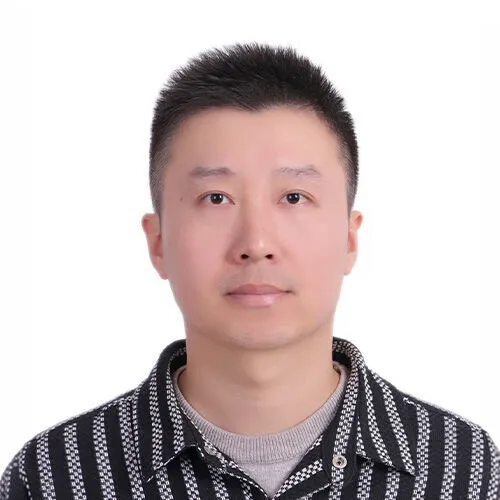
Yushuo Zhang
Petroleum Engineer
Oil & Gas Technology Research Institute, PetroChina Changqing Oilfield Company
Canada
Yushuo (Samuel) Zhang is a Petroleum Engineer with extensive experience in the oil and gas industry. He holds a Ph.D. in Chemical and Petroleum Engineering from the University of Calgary, where he also completed his Master’s and Bachelor’s degrees. Samuel has worked with major companies such as PetroChina and ExxonMobil Canada, specializing in reservoir simulation and enhanced oil recovery techniques. He is proficient in numerical reservoir simulation.
Participates in
TECHNICAL PROGRAMME | Energy Fuels and Molecules
Fueling the Future: Innovations & Strategies for Tomorrow’s Electricity Supply
Forum 13 | Hall 9 - Technical Programme 3
27
April
13:30
15:00
UTC+3
This study explores the potential of repurposing long-shut gas wells in China’s Ordos Basin for enhanced geothermal electricity generation through cold water injection within an Enhanced Geothermal System (EGS). The focus is on achieving sustainable high-temperature water production for electricity generation from ultra-low permeability reservoirs, with Lian5 and Lian6 abandoned directional gas wells used as case studies.
A dual-permeability model was developed using CMG STARS software to simulate various operational strategies. The model incorporated key factors such as natural microfractures, hydraulic fractures, and heat transfer within wellbores. The Lian5 well was vertically drilled and then side-drilled to form a horizontal section, which was connected to the Lian6 directional well for water production. The horizontal section of Lian5 was hydraulically fractured to create a high-permeability fracture network, enhancing heat exchange and facilitating cold water injection for efficient electricity generation.
Results indicated that closed-loop wells failed to sustain high-temperature production due to inadequate fracture networks. Directional wells met short-term production needs but showed rapid temperature decline. Horizontal wells, enhanced with high-conductivity fracture networks, proved optimal, maintaining stable production above 90°C for nearly ten years. For long-term cooling and electricity generation, lower injection volumes (1500m³/day to 2000m³/day) resulted in more stable and sustainable effects. Sensitivity analysis revealed that wider well spacing minimized thermal interference, thus improving system longevity and efficiency.
This research introduces a novel approach to sustainable geothermal electricity generation by optimizing horizontally stimulated wells in ultra-low permeability reservoirs, contributing valuable insights into the application of EGS technology in the Ordos Basin and offering a practical pathway for future geothermal electricity supply.
Co-author/s:
Xiaohu Bai, Fracture Supervisor, Oil & Gas Technology Research Institute, PetroChina Changqing Oilfield Company.
A dual-permeability model was developed using CMG STARS software to simulate various operational strategies. The model incorporated key factors such as natural microfractures, hydraulic fractures, and heat transfer within wellbores. The Lian5 well was vertically drilled and then side-drilled to form a horizontal section, which was connected to the Lian6 directional well for water production. The horizontal section of Lian5 was hydraulically fractured to create a high-permeability fracture network, enhancing heat exchange and facilitating cold water injection for efficient electricity generation.
Results indicated that closed-loop wells failed to sustain high-temperature production due to inadequate fracture networks. Directional wells met short-term production needs but showed rapid temperature decline. Horizontal wells, enhanced with high-conductivity fracture networks, proved optimal, maintaining stable production above 90°C for nearly ten years. For long-term cooling and electricity generation, lower injection volumes (1500m³/day to 2000m³/day) resulted in more stable and sustainable effects. Sensitivity analysis revealed that wider well spacing minimized thermal interference, thus improving system longevity and efficiency.
This research introduces a novel approach to sustainable geothermal electricity generation by optimizing horizontally stimulated wells in ultra-low permeability reservoirs, contributing valuable insights into the application of EGS technology in the Ordos Basin and offering a practical pathway for future geothermal electricity supply.
Co-author/s:
Xiaohu Bai, Fracture Supervisor, Oil & Gas Technology Research Institute, PetroChina Changqing Oilfield Company.
TECHNICAL PROGRAMME | Primary Energy Supply
Opportunities for Oil & Gas Supply Growth - Shales, Oil Sands, New Basins Other Unconventionals
Forum 02 | Hall 9 - Technical Programme 1
28
April
10:00
11:30
UTC+3
Mature oilfields, which contribute significantly to global production, often face challenges such as production decline, low recovery efficiency, and complex wellbore issues. This study presents integrated technical strategies developed and deployed in the Ordos Basin, China, aimed at enhancing recovery and stabilizing production in mature low-permeability oilfields.
The approach is structured around three main strategies. The first involves improving water flooding management through advanced technologies such as coded communication injection systems and self-adaptive conformance control agents, which help improve sweep efficiency and enhance injection profile conformance. The second strategy focuses on managing low-production and inactive wells. This is achieved through targeted methods like CO2-assisted re-fracturing, wide-fracture re-fracturing, and integrated well group stimulation to revive inactive wells and boost production. The third strategy involves the implementation of Enhanced Oil Recovery (EOR) techniques. These include gravity-assisted CO2 flooding, microfoam flooding, and quantum dot displacement agents, all aimed at improving recovery in low-permeability reservoirs.
Field results demonstrate significant improvements, including an increase in injection allocation qualification rates of more than 82 percent, a reduction in the natural decline rate, and significant incremental oil production from various stimulation and EOR methods. These technologies contributed to improved sweep efficiency, effective carbon utilization, and higher recovery factors.
This integrated technical system has proven effective in extending the productive life and maximizing recovery from mature, low-permeability oilfields like those in the Ordos Basin. The findings offer valuable insights for similar oil assets globally, providing a scalable and effective strategy for sustainable production and enhanced recovery.
Co-author/s:
Ting Huang, Senior Petroleum Engineer, Oil & Gas Technology Research Institute, PetroChina Changqing Oilfield Company.
Hongjun Lu, Senior Petroleum Engineer, Oil & Gas Technology Research Institute, PetroChina Changqing Oilfield Company.
Changhao Yan, Senior Petroleum Engineer, Oil & Gas Technology Research Institute, PetroChina Changqing Oilfield Company.
Xiaohu Bai, Senior Petroleum Engineer, Oil & Gas Technology Research Institute, PetroChina Changqing Oilfield Company.
Xiangping Li, Senior Petroleum Engineer, Oil & Gas Technology Research Institute, PetroChina Changqing Oilfield Company.
Bo Kang, Senior Petroleum Engineer, Oil & Gas Technology Research Institute, PetroChina Changqing Oilfield Company.
Jinzhu Yu, Petroleum Engineer, Oil & Gas Technology Research Institute, PetroChina Changqing Oilfield Company.
The approach is structured around three main strategies. The first involves improving water flooding management through advanced technologies such as coded communication injection systems and self-adaptive conformance control agents, which help improve sweep efficiency and enhance injection profile conformance. The second strategy focuses on managing low-production and inactive wells. This is achieved through targeted methods like CO2-assisted re-fracturing, wide-fracture re-fracturing, and integrated well group stimulation to revive inactive wells and boost production. The third strategy involves the implementation of Enhanced Oil Recovery (EOR) techniques. These include gravity-assisted CO2 flooding, microfoam flooding, and quantum dot displacement agents, all aimed at improving recovery in low-permeability reservoirs.
Field results demonstrate significant improvements, including an increase in injection allocation qualification rates of more than 82 percent, a reduction in the natural decline rate, and significant incremental oil production from various stimulation and EOR methods. These technologies contributed to improved sweep efficiency, effective carbon utilization, and higher recovery factors.
This integrated technical system has proven effective in extending the productive life and maximizing recovery from mature, low-permeability oilfields like those in the Ordos Basin. The findings offer valuable insights for similar oil assets globally, providing a scalable and effective strategy for sustainable production and enhanced recovery.
Co-author/s:
Ting Huang, Senior Petroleum Engineer, Oil & Gas Technology Research Institute, PetroChina Changqing Oilfield Company.
Hongjun Lu, Senior Petroleum Engineer, Oil & Gas Technology Research Institute, PetroChina Changqing Oilfield Company.
Changhao Yan, Senior Petroleum Engineer, Oil & Gas Technology Research Institute, PetroChina Changqing Oilfield Company.
Xiaohu Bai, Senior Petroleum Engineer, Oil & Gas Technology Research Institute, PetroChina Changqing Oilfield Company.
Xiangping Li, Senior Petroleum Engineer, Oil & Gas Technology Research Institute, PetroChina Changqing Oilfield Company.
Bo Kang, Senior Petroleum Engineer, Oil & Gas Technology Research Institute, PetroChina Changqing Oilfield Company.
Jinzhu Yu, Petroleum Engineer, Oil & Gas Technology Research Institute, PetroChina Changqing Oilfield Company.