


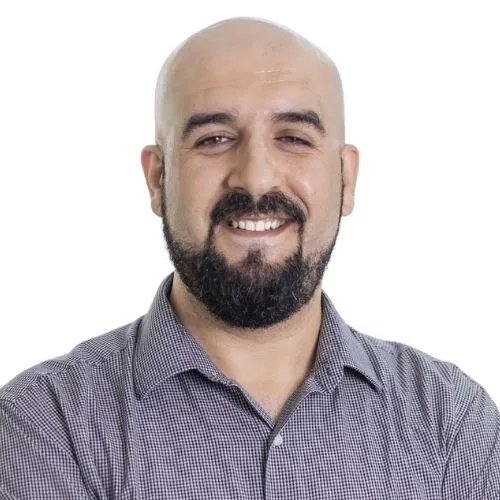
Sehmus Ozden
Scientist
Aramco Americas
United States of America
Sehmus Ozden is a Scientist at Aramco Houston Research Center. His reseach is centered around the design and development of advanced material systems and innovative processes to address critical challenges at the energy–water–environment nexus. With over a decade of R&D experience in academia and industry following his Ph.D., Dr. Ozden focuses on mineral extraction, produced water treatment, water management, clean hydrogen production, CO2 utilization and stimulation technologies at Aramco-Houston Research Center. He earned his B.S. and M.S. in Chemistry and Ph.D. in Materials Science and Nanoengineering from Rice University. Prior to his current role, Dr. Ozden worked at Los Alamos National Laboratory, Princeton University, and a technology startup. Throughout his career, Dr. Ozden has authored more than 70 high-impact peer-reviewed publications, contributed to over 20 patents, and written four book chapters. He is recognized for his ability to translate fundamental research into industrial applications. Dr. Ozden is an active member of the scientific community, serving as a keynote speaker, advisory board member, organizer, and session chair at international conferences.
Participates in
TECHNICAL PROGRAMME | Energy Fuels and Molecules
Lithium is a critical element for rechargeable batteries in electric vehicles and energy storage. Global demand for lithium is expected to far outpace supply within the decade, as traditional production methods struggle to meet the demand. The traditional extraction process pumps brines into large evaporation ponds, requiring 12–18 months to concentrate lithium. This method requires a large land use that is impractical to quickly meet the demand. In addition, this traditional approach is geographically limited and consumes a large amount of water resources. At the same time, oil and gas operations produce vast volumes of brine “produced water” with dissolved lithium. Globally, hundreds of millions of barrels of produced water are generated daily, yet virtually none of the lithium in this wastewater is recovered. Tapping into these unconventional lithium sources could boost supply while recycling a waste stream, aligning with industry sustainability goals. This abstract presents a new chemical process to directly extract lithium from such brines and produced waters efficiently, providing an innovative route to increase lithium production.
Methods, procedures, process:
Recent innovations have led to the rise of Direct Lithium Extraction (DLE) technologies that offer a more efficient and environmentally sustainable alternative to conventional evaporation-based methods for extracting lithium from brine and produced water. DLE approaches including adsorption, ion exchange, and solvent extraction enable direct lithium recovery from complex brines. This transition marks a crucial shift in lithium extraction approaches. In this context, our focus is on developing a and designing a system to extract lithium from low-concentration brine and produced water sources.
Results, observations, conclusions:
This study centers on the development of a porous materials system with integrated process for investigating lithium extraction mechanisms and addressing the challenges posed by low-concentration lithium in brines and produced water. The engineered materials system with integrated process demonstrates enhanced lithium adsorption performance compared to conventional materials systems particularly under low lithium concentration conditions.
Novel/additive information:
The improvement in Li-extraction process is attributed to the unique structural characteristics, tailored composition, optimized morphology, and increased surface area of the porous material system. These features promote more effective interfacial interactions with lithium ions in complex brine matrices. This porous materials system with integrated DLE processes not only boosts extraction efficiency but also supports a more sustainable and scalable approach, aligning with global sustainability and resource security goals.
Co-author/s:
Feng Liang, Scientist, Aramco Americas.
Nora K. Alsidairi, Scientist, Saudi Aramco.