


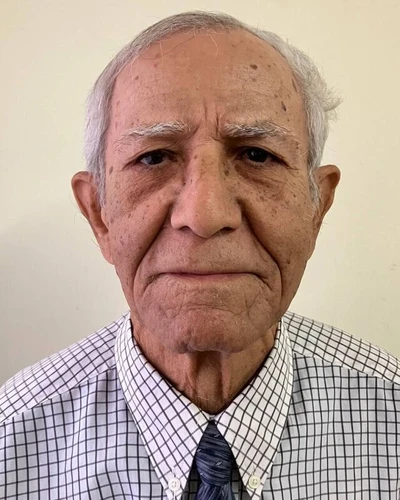
Juan Guillermo López Rivera
Senior Consultant
Cupet
JUAN GUILLERMO LÓPEZ RIVERA
Cuban, born in 1947 in Santa Clara, Cuba. Graduated as a Petroleum Geological Engineer in 1973 from the Petroleum Institute in Baku, Azerbaijan, and received his PHD in 1984 from the Gubkin Academy, Moscow, Russia. His main area of professional interest is the evaluation of hydrocarbon potential in Cuba and its adjacent seas, as well as in the Caribbean-Mexican region, based on the exploration value chain (petroleum systems evaluation). He has provided consulting services to foreign companies in Cuba, managed exploration and research-development projects, participated in technical negotiations for blocks in the Cuban archipelago and adjacent deep seas, and served as a technical counterpart. He has also conducted petroleum potential evaluations in countries like Angola, Venezuela, and Dominican Republic. Lead author and author of over 100 papers on the exploration potential of Cuba and its adjacent seas, including: Monograph “Geology and Hydrocarbon Potential of the Republic of Cuba”, 1993 (National Prize of the Cuban Academy of Sciences). “Knowledge Management and its Impact on Oil Exploration and Production in Cuba” (Annual Technological Innovation Prize of the Cuban Academy of Sciences and Award for greatest economic impact from the Cuban Ministry of Science, Technology and Environment, 2000). “Potential versus Risks in Exploration in Cuba”. Technical advisor to specialists and managers of foreign companies. He has held management positions in the Cuban Petroleum Geological Survey since 1976, and currently holds the position of Senior Researcher and advisor at the Petroleum Research Center of the Cuban state-owned company (CUPET). He has presented over 100 papers at scientific and technical events: AAPG conventions in Denver, 1994; Caracas, 1996; Veracruz, 1997; Rio de Janeiro, 1998; Barcelona, 2003; at World Petroleum Congresses (XVII, Rio de Janeiro, 2002; XIX, Madrid, 2008); congresses of the Latin American Association of Organic Geochemistry (Bucaramanga, 1994; Venezuela, 1998), and at all international events held by the Cuban Geological Society. He has received awards, medals, and recognitions from state, academic, social, and business institutions, as well as from the Cuban Geological Society, among which the following stand out: the "Carlos J. Finlay" Order, awarded by the Council of State of Cuba; the "Antonio Calvache Dorado" Award from the Cuban Geological Society as the best geologist in the country, 2007; and recognitions from twenty international oil companies for the consulting services he has provided. He teaches postgraduate courses and supervises undergraduate, master's, and doctoral theses.
Participates in
TECHNICAL PROGRAMME | Primary Energy Supply
Much pioneering work has been done on Cuban geology by Cuban and foreign geologists. The existing basis - knowledge in petroleum geology has been widely summarized in an evaluation conducted by the technical team of the CubaPetroleo's Research Petroleum Center (CEINPET) over the last five years. The results of this evaluation are introduced in this paper.
In order to achieve the above mentioned objective, several existing updated data, information, and knowledge on oil exploration and production were combined and integrated. An analysis, development and evaluation of criteria on the geological background and the petroleum geology had been performed, incorporating non-seismic and unconventional methods.
The previous paradigm for oil exploration in Cuba established the subsidence of the main producing sequences beneath rocks of the Caribbean Plate, with high geological complexity, thrusted from the south - relative to the current position of the Northern Cuban Oil Belt (NCOB) - located between Havana Bay and Cardenas Bay. The most developed sector of the Caribbean Plate was considered to have lower prospectivity.
The new model reveals areas with greater exploration potential not previously identified, offering the possibility of discovering larger oilfields with better - quality crude oil. It was demonstrated the presence of belts raised hypsometrically to the south (1.5–2.5 km), 20–30 km wide, extending 700 km in length, from Artemisa province to the west, to Holguín province in the east. This new model differences with the previous model, which only reaches about 200 km in length by 5–15 km in width, around the NCOB.
The new oilfields are predicted to contain better quality oils, up to medium and light, due to the increased maturity towards the south and the existence of improved preservation conditions. As a result, the reserve recovery ratio could be increase at least two to three times.
A methodology for the study, analysis, and evaluation of criteria, based on the geological background, evolution, and petroleum geology is established, founded on the exploration process value chain. This methodology allows the development of valid arguments regarding exploration potential. On the same page, the contribution of non-seismic and unconventional exploration methods improves the information knowledge for uncovering potential oilfields.
As a conclusion of this paper the new model strongly backs up the possibility of discovering oilfields up to the size of giants (like existing Varadero Oilfield), with higher - quality oil than those discovered in the NCOB and with higher reserve recovery ratio.
Co-author/s:
Jose Orlando Lopez Quintero, Senior Consultant, CUPET.
