


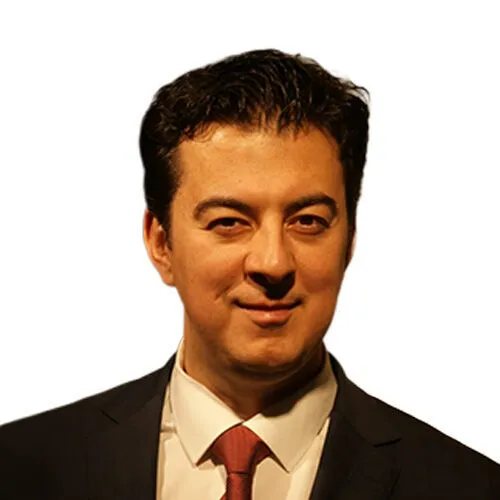
Oguzhan Akyener
Advisor
Turkish Petroleum
Turkiye
Oğuzhan Akyener is a distinguished expert in energy, diplomacy, and technology, currently serving as a faculty member at Middle East Technical University (METU) and the President of the Turkey Energy Strategies and Policies Research Center (TESPAM). With a career rooted in petroleum engineering and expanded through multidisciplinary academic achievements, he is a pivotal figure in shaping regional energy policies.
Professional Experience and Global Impact
Akyener’s career at the Turkish Petroleum Corporation (TPAO) began in 2006, where he became a key architect of international business development. He has held leadership and representative roles in over a dozen countries, including Azerbaijan, Libya, Iran, and Kazakhstan. Notably, he played a decisive role in the management and decision-making processes of world-scale projects such as Shah Deniz, TANAP, and ACG. His strategic projections on oil prices and global energy transitions earned international acclaim, leading to a prestigious invitation to train OPEC executives in 2021.
Academic and Technical Expertise
Akyener’s academic background is exceptionally diverse, holding degrees in Petroleum Engineering (METU), Business, and multiple Master’s degrees in International Security and International Relations. He is currently pursuing a PhD in Business at Ankara University.
A pioneer in integrating technology with energy, he has led the development and patenting of innovative systems, including:
· Autonomous Mining Drones and Smart Disaster Management Systems.
· AI-supported Foreign Policy Analysis and Smart Logistics Security.
· Modular Nuclear Reactor Design and specialized CBRN defense systems.
Intellectual Contributions
A prolific writer and commentator, Akyener has authored 14 books covering topics from Eastern Mediterranean gas policies to the intersection of AI and foreign policy (notably his Kızılelma series). He has published over 100 articles and provided thousands of interviews, contributing significantly to national security projects for the Turkish Presidency, including "National Security Restructuring" and "Value Chain Management Systems."
Currently, he continues his consultancy roles for various universities and remains a leading voice in energy security and geopolitical modeling.
Participates in
TECHNICAL PROGRAMME | Primary Energy Supply
On the other hand, the world needs much more rational analyses that consider climate goals while also grasping the social, economic, commercial, political, financial, and technological dynamics. Therefore, it is not very reasonable to shape future energy trends solely based on the dynamics constructed around carbon emission targets imposed or promoted by certain countries. Combating climate change and reducing carbon emissions — along with the associated plans, incentives, and investments — will of course impact global energy dynamics. However, instead of bending projections to fit climate goals, it would be a more reasonable approach to build consistent projections based on the world’s actual capabilities. This would also allow for more rational modeling of climate-related expectations.
In this context, this study will interpret the long-term global projections put forward by TESPAM, one of the prominent research centers in Turkey. Within the framework of these projections, global and regional energy transition trends, carbon emission targets, and trends in the oil industry will be analyzed in detail.